

US Trade Deal is Unacceptable! It’s an Attack on the livelihoods of farmers & farm, is Unpardonable!
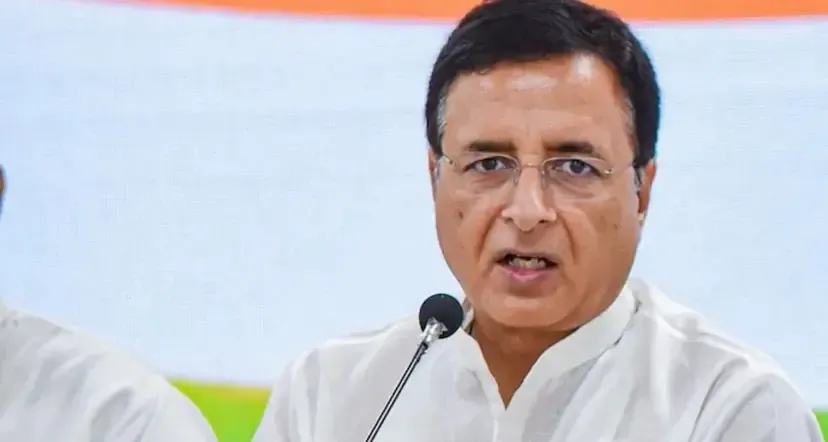
- Randeep Singh Surjewala, MP
Trade agreements are a path to economic progress. They must be founded upon equality and guided by the welfare of the people. Trade deals can never become a pathway of slavery or surrender of sovereignty. National interests and People’s welfare cannot be sacrificed at the altar of trade agreements. India’s 144 Crore people will never accept this. The Modi government has sacrificed the interests of India’s farms & farmers in the India - US Trade Agreement. It has openly compromised India’s energy security. Serious questions have arisen over India’s digital sovereignty and data privacy. Instead of standing firm in defence of Indian interests, a supposedly “strong” government has surrendered India’s self-reliance and independence. People are now asking, is this a “strong government” or a “Meek - weak - helpless government”? Is it “Atmanirbhar Bharat” (Self-reliant India) or “America-dependent Bharat”? Let us examine the brazen sacrifice of India’s interests by the Modi government:
(I) Betrayal of Farms, Fields & Farmers 1. Direct attack on lives and livelihoods of India’s farmers by permitting imports of American Agricultural and Food Products. • In the very first point of the “Framework Agreement” dated 6 February 2026, India has agreed to open its market for American food and agricultural products. • The first major item of import from America is Dried Distillers Grains (DDG), which is actually processed Maize (Corn). India produced 430 Lakh metric tonnes of maize in 2025-26, mainly in the States of Karnataka, Madhya Pradesh, Maharashtra, Rajasthan, Uttar Pradesh, Bihar, Telangana and Gujarat. In contrast, America produces 42.50 Crore metric tonnes of maize annually and desperately needs a huge market like India to sell its surplus.
Question: If duty-free American maize floods the Indian market, what will happen to Indian farmers? • The agreement has also opened the doors for duty-free imports of Jowar (sorghum) from America. India produced 52 Lakh metric tonnes of jowar this year (mainly in Maharashtra, Karnataka, Rajasthan, Uttar Pradesh, Madhya Pradesh and Gujarat), while America produced 87 Lakh metric tonnes Jowar, which is highest in the world and consequently, it needs the Indian Market. Question is: if duty-free American Sorghum (Jowar) is permitted in India, what will happen to the livelihoods of our farmers? • Similarly, the agreement allows duty-free import of Soybean Oil. India produced 153 lakh tonnes of Soybean annually. This is grown mainly in Madhya Pradesh, Maharashtra, Rajasthan and Karnataka.
On the other hand, America produced 12 Crore metric tonnes of Soybean and requires the Indian Market.
Question is: Once duty-free soybean oil imports are allowed in India from America, what will happen to the MSP and livelihoods of India’s Soyabean farmers?
• The biggest impact will be on cotton-growing farmers of India.
On 9 February 2026, America has also signed a trade deal with Bangladesh, under which Bangladeshi garments made from American cotton and yarn will enter America at zero duty. But Indian garments will attract a duty of 18%as compared thereto, putting our garment manufacturers at a huge disadvantage. This will have huge adverse implications for cloth and garment manufacturers in Tirupur, Surat, Panipat, Ludhiana as also rest of India.
On 12 February 2026, Commerce Minister, Shri Piyush Goyal publicly announced that India too will get the same concession on export of garments if it imports American cotton and exports garments. This means that the Modi government has opened the floodgates for duty-free import of American cotton into India.
At the same time, Bangladesh, which buys 50% of its cotton requirement from India, will now stop those imports. This is a double whammy for Indian cotton farmers.
The Modi government has already started importing American cotton. In 2024-25, India imported cotton worth $378 million (3,428 crore) from America, causing domestic cotton prices to crash1,000 per quintal below MSP. Cotton is widely grown in Maharashtra, Gujarat, Telangana, Madhya Pradesh, Rajasthan, Haryana, Punjab, Andhra Pradesh and Karnataka.
Question is: What will happen to cotton farmers of India and its biggest yarn, cloth and garment manufacturers, considering that India has the biggest spindle capacity in the world?
• Next hit will be Fruit and Nuts Producers of India i.e. Apple, Pear, Guava, Orange, Strawberry, Banana etc. as also Almond, Walnuts, Pistachio, Peanuts and other producers as import from America is made duty-free.
Lakhs of farmers in Himachal, Uttarakhand, Jammu and Kashmir and Northeastern States will be severely hit. Banana and Peanut farmers from U.P, Madhya Pradesh, Maharashtra, Karnataka, Kerala, Telangana, Odisha and Andhra Pradesh will also be hit.
Question is: When all fruits and nuts will be imported from America on a duty-free basis, who will protect the livelihoods of our farmers?
2. Import of Genetically Modified (GM) Agricultural Products, a body blow for Indian Farmers
India does not allow GM crop imports because they have the potential to destroy the purity of indigenous seeds, our biodiversity and over 2 lakh native varieties.
But if processed maize, jowar, soybean and other products come from America, will they not directly harm India’s biodiversity and purity of our seed lineage? Has the Modi government quietly allowed GM crop imports through the back door? Has any assessment been done of the long-term damage to India’s biodiversity and seed purity?
3. Removing “Non-Tariff Barriers” means removing ‘Farmer Subsidies’ and approving GM Crops
• The fifth point of the agreement clearly states that India will move towards removing non-tariff trade barriers as per concerns expressed by America.
• America gives its farmers $16 billion (1.45 lakh crore) in subsidies annually (2025 figures). In contrast, the Indian government gives its farmers just6,000 per family per year, while taking back much more through expensive diesel, fertilizers, electricity and pesticides (up to 25,000 per hectare).
Even the remaining benefits given to farmers are now being snatched away through this agreement. This decision is extremely dangerous for the entire farming community.
(II) Compromise on India’s Energy Security
• Just hours after the Trade Agreement was announced on 6 February, the US President issued an Executive Order withdrawing the 25% penalty tariff on India on the conditionality that India has promised to not buy crude oil from Russia. Surprisingly, the order also states America will continue to ‘monitor’ India and will re-impose penalties/tariffs, if India is found to be buying Russian oil, directly or indirectly, anytime in the future.
• The same commitment was repeated in the Fact Sheet issued by the American President on 9 February, 2026.
• On 14 February 2026, US Secretary of State, Marco Rubio has publicly stated at the ‘Munich Security Conference’ that India has given a ‘commitment to America’ to stop buying Russian oil.
• In May 2024, America had already imposed restrictions preventing India from buying Iranian oil, which the Modi government has also acceded to. Incidentally, Iran used to sell oil to India in Indian rupees.
• India is the world’s third-largest importer of crude oil. We import 40% of our requirements of crude oil from Russia and 11% from Iran, together meeting nearly 51% of our requirements.
Between February 2022 and January 2026, India imported $168 billion (15.24 lakh crore) worth of Russian oil and saved approximately $20 billion (1.81 lakh crore) due to lower/discounted prices.
• Now, under the US trade agreement, India will be forced to buy crude oil from America and Venezuela, at much higher prices than Russian or Iranian oil, with no assurance of cheaper or comparable rates.
• This is a direct compromise of India’s sovereignty and self-reliance.
(III) Forcing India to Buy $500 Billion (45 lakh crore) worth of American Goods in 5 Years, Is this in National Interest?
In 2024, India exported $81 billion worth of goods to America and imported $43 billion, giving India a trade surplus of $38 billion.
When Prime Minister Modi visited the US on 13th February 2025, the Joint Statement spoke of increasing “mutual trade” to $500 billion. At that time, this trade was not stipulated to be one-sided.
But in the 6 February 2026 trade agreement, this was completely overturned. It now states that India will buy $100 billion (9 lakh crore) worth of American goods every year for the next 5 years, totaling $500 billion (45 lakh crore).
The question is: Is this trade agreement based on equality or coercion? And why is the Modi government accepting it?
The country demands Answers!
Based on statement of Shri Randeep Singh Surjewala, MP General Secretary, Indian National Congress on February 16, 2026
Indian National Congress
AICC Hq, Indira Bhawan, 9A Kotla Marg, New Delhi - 110002