

This is a budget without an economic strategy, an economic statesmanship
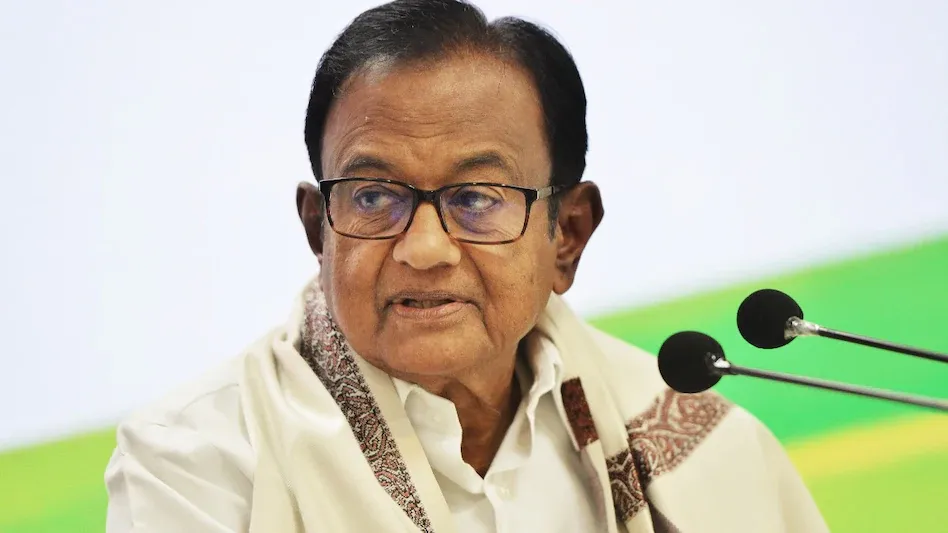
Statement by former Union Minister Shri P. Chidambaram, MP on February 1, 2026
Every pre-budget commentator and writer and every student of economics must be astonished by what he or she heard in the Finance Minister’s speech to Parliament on February 1, 2026.
I accept that a Budget is more than a statement of annual revenues and expenditure. In current circumstances, the Budget speech must lay out a narrative that addresses the major challenges outlined in the Economic Survey released a few days ago. I am not sure if the government and the Finance-Minister had read the Economic Survey 2025-26. If they had, it appears they have decided to discard it completely, and fall back on their favourite pastime of throwing words — usually acronyms — at the people.
I can count at least 10 challenges identified by the Economic Survey and many knowledgeable experts.
The penal tariffs imposed by the United States have created stress for manufacturers, especially exporters;
Protracted trade conflicts that will weigh on investment;
The growing trade deficit, especially with China;
The low Gross Fixed Capital Formation (approx. 30 per cent) and the reluctance of the private sector to invest;
The uncertain outlook for flow of FDI (foreign direct investment) into India and the persistent outflow of FPI for the last several months;
The agonizingly slow pace of fiscal consolidation and the continued high fiscal deficit and revenue deficit contrary to the FRBM;
The persistent gap between officially-announced inflation numbers and the ground realities in terms of bills for household expenditure, education, healthcare, and transport; The closure of lakhs of MSMEs and the struggle to survive of the remaining MSMEs; The precarious employment situation, especially youth unemployment; Growing urbanisation and the deteriorating infrastructure in urban areas (municipalities and corporations). None of this was addressed by the Finance Minister’s speech. It was therefore not surprising that the applause was perfunctory and most of the audience tuned out in quick time. Even the telecast by SANSAD TV switched off a few times! Even by an Accountant’s standards, it was a poor account of the management of the finances in 2025-26. Revenue receipts were short by Rs. 78,086 crores, total expenditure was short by Rs. 1,00,503 crores. Revenue expenditure was short by Rs. 75,168 crores and Capital expenditure was cut by Rs. 1,44,376 (Centre Rs. 25,335 and States Rs. 1,19,041). Not a word to explain this miserable performance. Actually, the Centre’s capital expenditure has fallen from 3.2 per cent of GDP in 2024-25 to 3.1 per cent in 2025-26.
In revenue expenditure, the cuts have fallen in heads that concern the common people. Examples: Rural Development: Rs. 53,067 crore Urban Development: Rs. 39,573 crore Social Welfare: Rs. 9,999 crore Agriculture: Rs. 6,985 crore Education: Rs. 6,701 crore Health: Rs. 3,686 crore
Funds have been cut in crucial sectors and programmes. Expenditure on the much-vaunted Jal Jeevan Mission was cruelly cited from Rs. 67,000 crores to a paltry 17,000 crores. (In 2026-27, it has been boosted to Rs. 67,670 crores, but what credibility does the number have?).
After the months-long exercise, the RE of Fiscal Deficit has adhered to the BE (4.4 per cent), and the projection for 2026-27 is that FD will fall by a meagre 0.1 per cent of GDP. The Revenue Deficit will be stationary at 1.5 per cent. It is certainly not a bold exercise in fiscal prudence and consolidation.
The most serious criticism of the Budget speech is that the Finance Minister is not tired of adding to the number of schemes, programmes, missions, Institutes, initiatives, Funds, Committees, Hubs, etc. I counted at least 24. I leave it to your imagination how many of these will be forgotten and vanish by next year.
Lastly, on Part B of the speech. Months after the passing of the Income Tax Act, 2026, that will come into force on April 1, 2026, the Finance Minister has tinkered with some rates. While the impact of the numerous minor changes has to be examined carefully, it must be remembered that the overwhelming majority of the people have no concern with income-tax or the income-tax rates. As far as indirect taxes are concerned, the average person will be concerned with only paras 159, 160 and 161 of the Speech. I welcome these small concessions.
Our verdict is that the Budget Speech and the Budget fail the test of economic strategy and economic statesmanship. On a question about PM Modi praising the budget, Shri P Chidambaram said- I have given one example of last year’s budget. They initiated a ‘PM Internship’ programme last year. 1,65,000 offers were made by companies. But only 20 per cent... that is about 33,000 people accepted the offers, because the conditions were so unattractive and of the 33,000 who accepted the offer… 6,000 dropped out. So, eventually, 1,40,000 offers were unattractive. So, he must tell us- which sector, which job is available to the youth.
The unemployment rate for youth is close to 17 per cent. Therefore, where does this budget create jobs? Where does this budget tell young people- these are the jobs! I am giving an example of last year’s budget programme and let’s see what happens in this year’s budget programme.
On another question about the Government’s announcement regarding rare earth corridor, Shri P Chidambaram said- I am never impressed by an announcement. I want to see the scheme. What are the conditions of the scheme? What is the amount provided for the scheme and the technical data about the scheme? I don’t want to comment upon an announcement. What is the use of an announcement unless you actually see the details of the scheme, then I will comment. On another question, Shri P Chidambaram said- You ask me about the budget; I will tell you. This is a budget without an economic strategy, without an economic statesmanship.
On another question about allocations for education, Shri P Chidambaram said- See, this is education… what the Central Government will spend on education. This number I read that cuts in the budget expenditure is about Central Government’s expenditure on education sector in India. Those who go abroad, they will go on their own money or on scholarship or on support from relatives or friends, this cut in budget is to do with Indian government spending money on education sector in India.
On a further question on foreign studies about this, Shri P Chidambaram said- We are not talking about… this number is not about foreign studies, this number is about Indian education. If rural families or poor families or middle-class families do not have money to go abroad, I accept it. Even many upper middle-class families are dropping their idea of education abroad, because the rupee has depreciated and Trump has made visas more difficult- student visas… So, that is not the subject matter of today’s budget.
On another question that central government is saying that it has increased budget for defence sector, while it was low in UPA government, Shri P Chidambaram said- You are asking about comparative expenditure in UPA and comparative expenditure in NDA on the defence. Let me tell you the numbers.
Defence expenditure as a percentage of total expenditure, as a proportion of total expenditure, was 16 per cent in 2013-14. Now, in 2025-26, it has come down to between 14 per cent and 14.5 per cent as a percentage of total expenditure. As a percentage of GDP, we had touched 2.25 per cent or 2.3 per cent in 2013-14. This year, it is just below 2 per cent. So, either as a proportion of GDP or as a proportion of total expenditure, it has come down between UPA and NDA. Shri Jairam Ramesh added that this is a very important point, which Shri Chidambaram Ji just made, regarding the share of GDP or the share of the total government expenditure. These are the two figures. According to these two figures, the expenditure on defense during the NDA government was less compared to the expenditure during the UPA government... Understood? If you consider the share of GDP or the share of total government expenditure and compare the two periods, the UPA government spent more on defense, in terms of its share, compared to the NDA government.
On another question that do you think this union budget masks a fragile household finance dynamic of the country, Shri P Chidambaram said- As far as I know, the last numbers released by the Household Survey showed that financial savings of household have come down and household borrowing has touched an all-time high. I think, household debt has touched 51.7 per cent or so and correspondingly, household savings have come down. The Finance Minister didn’t even mention these two numbers, whether she is aware of these two numbers and what is her comment on these two numbers, I don’t know. You should ask her when she addresses a press conference.
Shri Jairam Ramesh added, "The domestic savings rate has decreased significantly, and household debt has increased. These are two crucial figures that the Finance Minister has overlooked in this budget. If domestic savings continue to decline every year, the capacity for investment will decrease, as investment is only possible when there are savings. So, the savings rate is falling, as Shri Chidambaram just mentioned, and household debt is increasing. Therefore, this budget has not been prepared keeping the domestic economic realities in mind."
On another question that government has increased the budget for VB-G RAM-G scheme as compared to MGNREGA last year, what is your take on it, Shri P Chidambaram said- Let’s look at the numbers. In MGNREGA last year, the budget expenditure was Rs. 86,000 crores and the revised expenditure is Rs. 88,000 crores, the little more… more or less the same.
On VB- G RAM-G, I mean I don’t know what VB-GRAM-G means… it is the substitute programme for MGNREGA, and now allocation is Rs. 95,000 crores. So, on Rs. 86,000 or Rs. 88,000 crores, they provided an average employment of 50 days a year. Last few years, they are providing an average employment for 50 days a year per household after spending 86-88 thousand crores.
Now today, by spending Rs. 95,000 crores, how does the government promise 125 days? 125 days must require two and a half times the last year’s allocation. 50 x 2.5 is 125. So, Rs. 88,000 crores must go up to almost 2 lakh crores before you provide 125 days’ employment.
Shri Jairam Ramesh added, "That's not all, there's another related issue. It's true that Rs. 95,000 crores have been allocated for the MGNREGA scheme in the budget. But remember that 60 percent of the expenditure is the central government's share, and 40 percent will come from the states. If the states don't have the funds, if they can't invest in this, if they can't spend, then the central government can't spend arbitrarily. The Prime Minister has already said that this new law, this new act, will be implemented on a 60-40 basis... which wasn't the case with MGNREGA. Initially, the ratio was 90-10, but now it's 60-40. So, it will take a long time to determine the basis on which you will allocate funds to the states. What formula will you adopt? Based on what formula will different states receive varying amounts of money? Are those states in a position to spend the money? For example, Rajasthan will need approximately 4,500 crore rupees extra this year to implement this new act. Does the Rajasthan government have that much money? And do all the other states have it?"
So, it's easy to give all these figures, it's easy to publish a figure in the budget. But as Shri Chidambaram just said, don't go by the announcements, show me the details. What are the details of this new act? Have you consulted with the states or not? On what basis, on what formula, what formula have you adopted to determine how much money each state will receive? Those details are completely missing from this budget.
On another question about the government’s expenditure on interest payment in budget, Shri P Chidambaram said- That’s a too simplistic statement. As long as the debt to GDP is under control, then you can borrow and spend. As long as you can pay the interest on the debt, there is no harm in borrowing and spending. Borrowing is equal to fiscal deficit. Every government has borrowed and spent. So, nothing wrong with the fiscal deficit, nothing wrong with borrowing and spending, but the borrowing and spending as a proportion must come down… come down to 3 per cent of FRBM. Only in 2007-08, we achieved 2.5 per cent, well under the FRBM limit of 3 per cent. Today, it is 4.4 per cent and it will go down to 4.3 per cent next year. By the time it goes down to 3 per cent... at this rate- 0.1 per cent a year, it will take 13 years. Therefore, we are saying, debt to GDP ratio may come down, but you should do fiscal consolidation quite rapidly. You can’t do it 0.1 per cent a year.
On another question that do you believe this budget has snubbed Tamil Nadu, Shri P Chidambaram said- See, he hurls so many snubs every day. Every time he visits Tamil Nadu, he snubs the Tamil Nadu government, Tamil Nadu people. So, what does it matter, one more snub. It doesn’t matter at all. According to me, it (the BJP) is irrelevant in Tamil Nadu. And what is this rare earth? I mean, who understands rare earth in Tamil Nadu. How many people’s lives will be affected by the rare earth exploration programme. These are all high-sounding words. But the fact is that he has denied funds to Tamil Nadu. The Tamil Nadu government has documented it and he is not spending the money that he promised for central sector projects… for example- the AIIMS. AIIMS in Madurai was announced several years ago. They are now talking about building an AIIMS for Ayush. Good luck wherever it’s located, but what about the AIIMS in Madurai, why is it not functional?
On behalf of Thiruvalluvar, I thank them for not mentioning him. On another question that no fund has been allocated for Chabahar port, do you think that India is quietly bowing under the US pressure? Shri P Chidambaram said- I don’t know whether the defence budget has a line entry on Chabahar… I don’t know. I have not read every line of the defence budget, I don’t know. But, it’s possible, you are right.
Have you read the defence budget line by line? (Asked the reporter. The reporter replied- yes. No funds have been allocated for the Chabahar port in the budget.) It’s sad. If Chabahar… which means, they are succumbing to somebody’s pressure. If you are right in your statement, the government of India is succumbing to somebody’s pressure.
#Budget2026 does not provide a single solution to India’s many economic, social, and political challenges.
Indian National Congress
AICC Hq, Indira Bhawan, 9A Kotla Marg, New Delhi - 110002