

‘Be truthful to what you are for giving a way forward to the Nation’
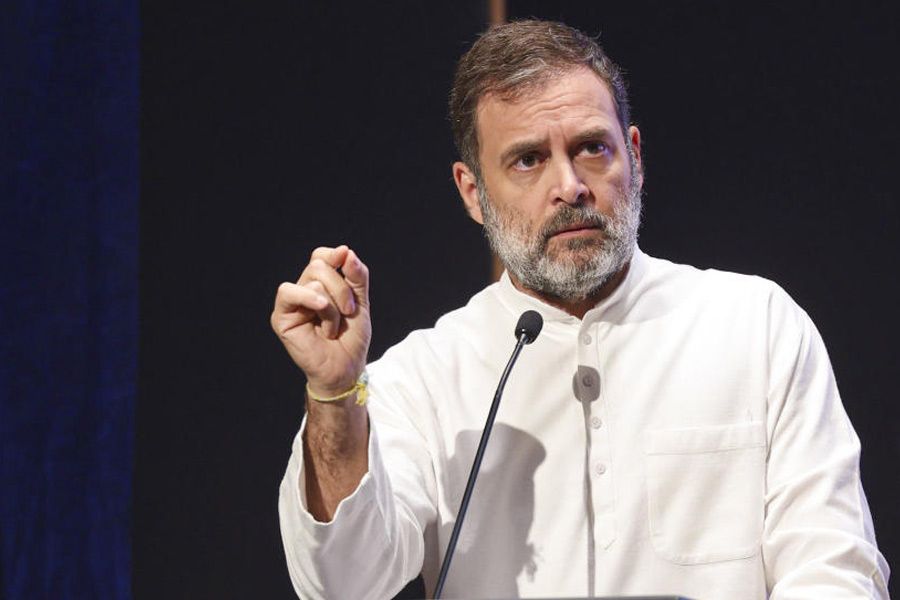
Extracts of the speech of Shri Rahul Gandhi, Leader of Opposition (Lok Sabha), on the ‘Motion of thanks’ to the President’s Address in Lok Sabha on February 3, 2025. Shri Rahul Gandhi said- Thank you, speaker sir for allowing me to speak on the President’s address. Thank you, double thank you sir, I heard the President’s address, I sat there with Kharge Ji and I listened to it and I must say, I struggled through the President’s address to maintain my attention on what was being said, because I had heard pretty much the same President’s address the last time, at the time before that and the time before that. And it was the same laundry list of things that the government has done, we have done this, we have done this, we have done these 50 or 100 things that the government has done and so while I was sitting there, I was thinking okay! I am being critical about what is being said, and I am saying that this is not the type of President’s address that should be delivered. Well, the question came to my mind, what type of address would INDIA Gathbandhan government deliver, how would that address be different than the address we heard because it’s no point me saying, that it is a laundry list and then not providing an alternative idea.
And so today I would like to layout some dimensions of what an alternative address would look like, what the INDIA Gathbandhan would probably focus on and where we would lay emphasis. The future of this country is going to be decided by the young men and women of this country, the youth of this country. So, I think anything we say has to be addressed to them, has to be spoken to them. The first thing in front of us and this is something I am sure, the Prime Minister would accept and pretty much everybody in this room will accept is that even though we have grown, we have grown fast, we are growing slightly slower now, but we are still growing. A universal problem that we have faced is that we have not been able to tackle the problem of unemployment. No! neither the UPA government nor today’s NDA government has given a clear-cut answer to the youth of India about employment.
I don’t think anybody in this room will disagree with me. I will give a little statistic for the Prime Minister, the Prime Minister, something I would agree with directionally, the Prime Minister proposed the ‘Make in India’ programme I think, a good idea we saw the statues, we saw the functions, we saw the so-called investment and the result is right in front of you. Manufacturing fell from 15.3 per cent of GDP in 2014 to 12.6 per cent of GDP today. That is the lowest share of manufacturing in 60 years. I am not even blaming the Prime Minister because I think, it would not be fair to say he didn’t try, I could say that the Prime Minister tried and I think conceptually ‘Make in India’ was a good idea, but it’s pretty clear that he failed because manufacturing went from 15.3 per cent of GDP to 12.6 per cent.
So, the first question that any alternative vision would answer to the youngsters of our country is- okay, what and how are we going to solve this problem of employment? Any country basically organises two things, you can organise consumption and then you can organise production. Modern way of saying organising consumption is services, modern way of saying organising production is manufacturing, but there is more to production than simply manufacturing for example; agriculture also is about production.
Now, pretty much, every government since 1990 has done a decent job on consumption, on organising consumption. Which are the companies that organise consumption- Uber organises consumption, Reliance organises consumption, Adani organises consumption, but, we have, as a country, failed in organizing production. We have excellent companies, they try to organise production, there are the Mahindra of this world, there are the Bajajs of this world, part of TATAs organises production, but the record of the country in organising production is dismal. And essentially what we have done is a way of handing over the organization of production to the Chinese.
So, this mobile phone (shown mobile phone), even though we are saying, we make this mobile phone in India, that is not a fact, this phone is not made in India, this phone is assembled in India. All the components of this phone are made in China. The network that has produced this phone is made in China, is owned by China. So, every time we use a phone, every time we wear a Chinese shirt, a Bangladeshi shirt, every time we pair of Chinese sneakers, we are paying a tax to China because some Chinese youngster is earning a salary to make or to produce that product.
So, the first message I would give in a Presidential address would be that India has to focus completely on production, because if we do not focus on production and we continue to focus only on consumption, we will find that we will run huge deficits, we will increase inequality, and eventually, we will run into a serious problem-social problem because of unemployment, which we are already facing. If you look at the numbers of the amount of people who are in jail, if you look at the numbers that are spent on internal security, if you look at the numbers spent on our police forces, they are all spiral, they are all rising and everybody understands, the social tension is on the rise in India.
So, now the next question comes, okay! So, where is this employment going to come from, what is India going to produce and for that I would like to tell all the youngsters of this country that there is a revolution taking place, an existing revolution, the world is transforming completely and the change that is taking place… at the heart of the change that is taking place. We are moving from the world of the internal combustion engine to the world of the electric motor, we are moving from petrol to batteries, we are moving wind, solar potentially nuclear energy. So, our entire way of moving is changing and this is going to change every single thing, it is going to change warfare, it is going to change medical treatment, it is going to change education, it is going to change how we eat, it is going to change every single thing.
Now, the last time there was a revolution called the computer revolution, the government of India had a clear focus, we looked at that revolution, it was a Congress government, we looked at the revolution and we decided clearly that we are going to focus on the development of software and we wrote the wave of that revolution and today you can see the result, I remember people laughing, when the computer was being talked about. You mentioned Mr. Vajpayee, I respect Mr. Vajpayee, but Mr. Vajpayee gave a speech saying that computers have no consequence to India. So, what is important when there is revolution, what is important is that you understand, what are the drivers of that revolution and where exactly do you need to focus, where exactly do you need to sit in that revolution.
I said, that this revolution is going to change everything. And I want the youngsters in this country to think about. There is a war going on in Ukraine, the war in Ukraine is actually a war between the internal combustion engine and the motor, the electric motor is inside the drone, the engine is inside the tank and you look at what is going on in Ukraine. The tanks are dying by the thousands and small little drones with electric motors, small batteries not much bigger than that are destroying the entire tank, artillery infrastructure of both Ukraine and Russian.
So, the drone is the electric motor, the drone is the battery, the drone also needs to see, so the drone is a camera. In the same way electric cars, the electric car is a motor, the electric car is batteries, the electric car is cameras, robots are exactly the same thing, robots are electric motors, multiple electric motors with cameras, with batteries and this is what the revolution is going to look like. So, there are basically four technologies that are driving this entire change in mobility, electric motors, batteries, optics and then on top of that you can apply AI. Now, people I want to tell the youngsters of this country, people talk about AI, but it’s important to understand that AI on its own, it’s absolutely meaningless because AI operates on top of data. Without data, AI means nothing and if we look at data today, there is one thing which is very clear.
Every single piece of data that comes out of the production system in the world, the data that was used to make this phone, the data that is used to make electric cars, the data that is used to make basically all electronics on the planet today is owned by China. And the consumption data is owned by the United States. In China, the consumption data is owned by China, but in India, companies like; Google, companies like; Facebook, companies like; Instagram, X. They own our consumption data. So, if India wants to talk about AI, it has to first answer the question what data is going to power that AI? And the answer today is, India doesn’t have that data, neither does India have production data, neither does India have consumption data. We have handed our consumption data to the big American companies and the production data we don’t have anyway.
So, what would that vision look like. The first thing, we would start getting youngsters excited about this revolution. We would start to introduce the idea of a completely new way of moving, a complete revolution in how things move, we would start teaching our children in schools about, batteries about electric motors about how these things combine, about how drones, robots, electric cars are structured, how they will work together and most important, we have to start building a production network, so that we can get access to production data.
Now, what would we focus on, we would not give you a laundry list. China has at least a ten-year lead on India in the space. China has been working on batteries, robots, motors, optics for the last ten-years, and we are behind. So, what would our President’s address say to the youngsters, we will choose critical areas in each one of these technologies and we will start to build capabilities in those areas. The second thing we would do, we would ensure that our banking system is not captured by two or three companies that basically do not allow you to build a production system, but our banking system is open, is dynamic and is accessible to small and medium business and to millions-and-millions of entrepreneurs who want to take part in the revolution.
Our foreign policy would take into account this revolution when we talked to the United States. We would not send our foreign minister to invite our Prime Minister to his coronation. We will not send him three or four times to please invite our Prime Minister because if we had a production system and we were working on these technologies, the American President would come here and invite the Prime Minister. So, I am sorry that disturbed you, that question, I apologise for disturbing your peace of mind, okay! I have apologies for disturbing your peace of mind, I am sorry. So, we would start by telling our young men and women that they have to be at the forefront of this revolution. We cannot afford that the Chinese are at the forefront of this revolution. Number one. Number two, we would ensure that the absolute best experts on these technologies would talk to our students, would talk to our youngsters and guide them on what a future… on what these future technologies are going to do. We would make them partners in this revolution. Now, we talk about defence and today we have the Chinese and the Prime Minister has denied it and the army has contradicted the Prime Minister (interruptions) the Prime Minister has denied it, and the army has disagreed to the Prime Minister that China is sitting on 4,000 sq kilometers of our territory.…(Interruptions… let me speak, sir, let me speak sir, The Prime Minister has denied that Chinese forces are inside our territory, but for some reason our army keep talking to the Chinese about their entry into our territory and our Chief of Army Staff has said that the Chinese are inside our territory. This is a fact, this is not invention, this is a fact. Now, what the reason China is inside our territory is important because people think that wars are fought between armies and their weapons, but the fact of the matter is that wars are fought by industrial system, the fact of the matter is that China has an industrial system that is far stronger, far bigger than our industrial system and that is why they have the guts to come inside this country. The reason China is sitting inside this country is because ‘Make in India’ has failed, the reason China sitting inside this country is because India is refusing to produce and I am worried that India is going to give up this revolution to the Chinese once again. The reason, I made this reference is because everything is connected, when we if and when we fight a war with China, we will be fighting with Chinese electric motors, Chinese batteries, Chinese optics and we will be buying Chinese motors, Chinese optics, Chinese batteries. It is a non-sustainable proposition! That is why for our security, for the future of our children, for the future of our country, we have to build a production system and we cannot allow this revolution to go by.
Now, the next step, we have a strategic partner, called the United States. The partnership should focus on how India and the United States can work together to take advantage of this revolution. That is what the conversation should be on. Please understand that India is as important as the United States, for the simple reason that they cannot build an industrial system without us, they cannot build a production system without us, no matter what they say. The American simply cannot do, what India can do, because their cost structure is much, much, much more expensive than ours. We can build things that the Americans would never imagine, India can do that. So, that would be the first part of a President’s Address.
We would talk to the youngsters in India and say to them- we want you to be partners in this revolution, we want to change the Indian Banking system, so you can have access to it and we believe in you, we trust in you and we believe you can take on the Chinese, there is a first part.
The second part would be about participation. We have done a caste census in Telangana and what we have found is shocking. Almost 90 per cent of Telangana is either Dalit, Adivasi, Backward or Minority, almost 90 per cent and I am convinced that, that is the story across the country. I am absolutely convinced that the OBC population of this country is not one less than 50 per cent, possibly 55 per cent. 16 per cent are Dalits, 9 per cent are Adivasis, 15 per cent are Minorities.
Last budget, there was a photograph. You remember the photograph? The one which showed them distributing butter and halwa? I was surprised to see that this time, the photo is deleted. Halwa was laid out but for whom? We have no answer to this!
At the center of any new development paradigm for this country, which runs parallel with the production paradigm I spoke of, which works together with the production paradigm I spoke of, is the participation of Lower Castes, OBCs, Dalits, Adivasis in the wealth of this country.
If we look at the largest corporates in this country, they are all owned… none of them are owned by OBCs, none of them are owned by Dalits, none of them are owned by Tribals. If we look at the biggest media companies, that support the Prime Minister, every day we see the Prime Minister’s pleasant face, smiling face on these Medias, none of them are owned by OBCs, none of the are owned by Dalits, none of them are owned by Adivasis, this is the fact.
So, central to any new development paradigm is the architecture of a new paradigm and that architecture of the new paradigm can only be built once the caste census is placed on this table. Because once, the caste census is placed on the table, we will know exactly, how much of this country’s wealth, how much of this country’s power, how many of this country’s institutions are owned by 90 per cent of this country.
There are OBC MPs in the BJP, there are Dalit MPs in the BJP, there are Adivasi MPs in the BJP; remember, you are OBCs- OBCs, you have 50 per cent of the population and you have absolutely no power. I know that you are sitting there and you cannot even open your mouth, that is the truth of the country.
Speaker sir, so the idea is, on one side- allow India and the Indian youngsters to participate in the coming mobility revolution; allow them to participate in building robots, in building drones, in building electronic items, in building TVs and on the other side, running parallel.
Speaker sir, so parallel ideas- one idea, participate in the mobility revolution. Whether you are thinking of economy, weapons, production, health care, India should participate in this revolution. India should become the master of the electric motor, master of the battery, master of optics and master of AI applied on top of that production system.
Now, imagine the power of AI, when we apply it to the caste census. You imagine what we will do with AI and what we will do with the social revolution in this country, when we start to apply AI on the data that we get from the caste census. So, we are going to run a parallel track. One side, participation, revolutionizing the participation of Dalits, OBCs, Adivasis in the ruling of this country, in the institutions of this country, in distribution of wealth of this country and on the other side, parallel track- challenge the Chinese and participate in the revolution and defeat the Chinese in electric motors, batteries, solar panels and wind. So, that is the first two parts of any Presidential Address that any ‘INDIA Gathbandhan’ leader would give you.
The final, of course, we go back to the Constitution. This (showing copy of the Constitution), our favourite… just like the production system is a weapon, just like ‘Jatiya Jangadana’ is a weapon of transformation, this is what the entire architecture is built on.
I remember, before the elections all of you were saying- ‘400 paar’ and you were saying- you would change this (Constitution) and then I was glad to see that the Prime Minister walked in and then was forced to bow his head in front of the Constitution. It was the moment of pride for all Congress people that we had explained to the Prime Minister and to the whole country that no force will dare touch this (Constitution). I know that the RSS has never accepted this. Mohan Bhagwat Ji has said that India didn’t get independence in 1947. He has said that this Constitution is meaningless, I know that, that is at your heart, we will never let your dream come true. This Constitution is going to rule India always.
Speaker sir, Mohan Bhagwat Ji made a statement saying that India did not receive independence in 1947, it received the independence, when the Ram Mandir was inaugurated, we will place that on the table.
Now, sir, I would like to mention one small thing, but, very important thing. Speaker sir, this Constitution is supported by the vote of our people. Without the secure vote of the Indian people, this Constitution means nothing.
Now, I want to bring to the notice of this house, some data, some information about the Maharashtra election, very simple stuff. Speaker sir, between the Lok Sabha election, which the INDIA alliance won and the Vidhan Sabha election, the voting population of Himachal Pradesh was added to the voting roll of Maharashtra- meaning, the entire population of Himachal Pradesh was added to the voter roll of Maharashtra. Please understand what I am saying. In Lok Sabha, the difference between Lok Sabha and Vidhan Sabha was the population of Himachal, the entire population were almost 70 lakh new voters suddenly arrived between Lok Sabha and Vidhan Sabha.
Now, the most interesting part and the Prime Minister is not looking at me… the most interesting part is… he is not looking at me suddenly. The most interesting part is more voters were added in five months in Maharashtra, than were added in five years in Maharashtra. Sir, there is a building in Shirdi where 7,000 new voters have been added in a building. Sir, I am not making any allegation. I am just saying, Sir, that there is something problematic in this, that voters as big as Himachal Pradesh magically come after the Lok Sabha elections.
Now what are we saying, we have repeatedly told the Election Commission that we are not making any allegations, you do one thing, give us the voter list of Lok Sabha, give us the names and addresses electronically and Vidhansabha... Sir, I will explain. Speaker Sir, we are asking this question, we are asking this… speaker sir, population of Himachal Pradesh has voted extra in Maharashtra. We are saying to the Election Commission, please give us the names and the address and polling booths of all the workers in the Lok Sabha and all the workers in the Vidhan Sabha, so we can calculate who these new voters are?
Interestingly, the new voters are mostly in the Constituencies that the BJP has swept, please understand the new voters have been added mostly in the Constituencies where BJP has swept. I am still not making an allegation. I am saying on the floor of the house that the Election Commission has to give the data of the Maharashtra elections to the Congress Party, to the Shiv Sena and to the NCP, so that we can see exactly where these voters have been added, who has subtracted, who has been added, where they have been added.
This is not an irresponsible request; this is a very simple request for them to fulfil. The reason I am saying this sir is because the rules have been changed, it is not… this is not just said in isolation. Speaker sir, the Election Commissioner used to be chosen by the Prime Minister, Leader of Opposition and the Chief Justice, sir the Chief Justice was removed from that committee, why? This is a question sir, this is a question to the Prime Minister, why was the Chief Justice removed from the committee?
Now, in a few days, I am going to go to the meeting, there is going to be Mr. Amit Shah and Mr. Modi Ji, and there is going to be me- two to one, why am I even going to the meeting, what is the purpose of me going to the meeting? I am only going to the meeting to certify what Modi Ji and Amit Shah Ji, are going to say, right! Whereas if the election, whereas if the Chief Justice was there, there could be a discussion, Chief Justice and Leader of Opposition could say, no! We don’t agree, so, that seems to be a calculated strategy. Now, just prior to the Lok Sabha, the Election Commissioner was changed, and two new election commissioners were placed. We know that the election dates were changed, we know that the elections were postponed, these are facts, these are not things I am inventing.
So, in order to safeguard this Constitution (showing the Copy of Constitution) the entire opposition requests the data for the Maharashtra election, we request the data and the electoral voter list for Lok Sabha and the corresponding list for Vidhan Sabha and I am very confident that the Election Commission will not give us this information. Speaker sir, that is broadly so the third element of our President’s address would be a determined defence of India’s institutions of our democratic system and a relook at our entire democratic framework and the looking again at all the institutions that have been taken away from the people of India. So, those would be the type of things that we would say in a Presidential address.
So in the last, there is a philosophical background to what I am saying. Essentially, what I am saying to the youngsters of India and to this house is that instead of focusing on multiple things, instead of telling us a laundry list, give us a strategy, give us a vision, make it clear.
Now, there is a philosophical basis to this, there is a… even a deep philosophical basis to this. I showed you the picture of Shiv Ji, which you didn’t allow me to show. I showed that picture for a reason. What does that picture tell us? If you look at that picture carefully, it tells us- focus carefully, do not get distracted, do not look here and there, do the job at hand. So, there is a philosophical basis to the speech I have given. I have now told the house and the country that we will do this, this, this, this, this, this, and this. This is the philosophy of Shiv Ji- say what you have to say, but, be clear that you are going to do that one thing and don’t do 56 or 70 different things. So, there is a link between our philosophical tradition, our religious tradition and what I am saying and that is what India needs to do. India needs to connect the past, the values of the past.
You talk about Sardar Patel Ji, but you destroy Sardar Patel Ji’s values every day. You talk about Ambedkar Ji and you destroy his values every day. You talk about Nehru Ji- no, you don’t talk about Nehru Ji. You bow in front of Buddha, you destroy what he says.
So, the point is, you have to be truthful to what you are and it is important that when you are giving a way forward to the nation, there is clarity… there is clarity of purpose, there is no hatred, there is no violence, there is no anger, because these things are destroying our country. So, my speech has not been angry, has not been nasty; my speech has been very polite, very kind and I thank the Prime Minister for coming and listening to it.
Indian National Congress
AICC Hq, Indira Bhawan, 9A Kotla Marg, New Delhi - 110002