



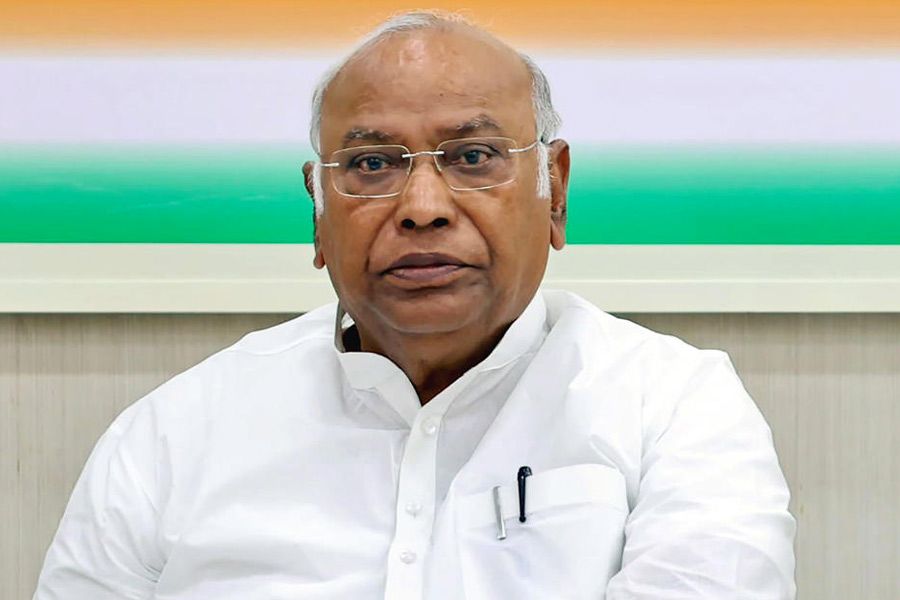
For the first time in the history of the country, farmers have been taxed: Shri Mallikarjun Kharge
With reduced GST rates on several items, the Congress Party said that the “limited” reform comes eight years too late and a “big question mark” remains on whether the benefits of tax reduction will be passed on to consumers.
Congress General Secretary in-charge of communications, Shri Jairam Ramesh, said that the National Anti-profiteering Authority (NAA) was established under Section 171 of the Central Goods and Services Tax Act, 2017, to monitor whether GST rate cuts resulted in the reduction of consumer prices but was rendered “toothless” by the Narendra Modi government with a notification issued on September 30, 2024.
“It should not be a case of ‘vote chori’ on one hand and ‘munafakhori (profiteering)’ on the other hand with the people not getting the benefits of the GST reduction,” Shri Ramesh told media. He pointed out that at the very launch of GST in 2017, Shri Rahul Gandhi and the Congress had pointed out the problems and asserted that what was brought in was the “Gabbar Singh Tax”. Taking a swipe at Prime Minister Narendra Modi, General Secretary (Communication) said that when he was the Gujarat Chief Minister, he opposed the GST proposal of the then UPA for eight years from 2006 to 2014.
“We have been demanding reform of the GST regime since 2017, but the reform that has been carried out eight years too late is limited. The procedural complexities have not been eased, which was much needed. There is also a big question mark on whether the benefits of tax reduction will be passed on to the consumers or not,” Shri Ramesh said.
He asserted that this reform is not a “GST 2.0” that the Congress has been demanding, but at best can be termed “GST 1.5”. The Congress on Sunday (September 21, 2025) accused Mr. Modi of taking “sole ownership” of the amendments made to the GST regime and said that the current reforms were inadequate, with outstanding issues, including states’ demand for an extension of compensation for another five years, remaining unaddressed.
The Opposition Party slammed the reforms as “applying a band-aid after inflicting deep wounds” and said that the government should apologise to the public for its GST on essential items. Meanwhile, Congress President Shri Mallikarjun Kharge said in X-post on GST Reform, “For almost a decade, the Indian National Congress has been demanding simplification of the GST.” The Modi government had changed “One Nation, One Tax” to “One Nation, 9 Taxes”, which included Tax slabs of 0%, 5%, 12%, 18%, 28% and special rates of 0.25%, 1.5%, 3% and 6%. The Congress Party had demanded for GST 2.0 in its 2019 and 2024 manifestos, with a simplified and rational tax system. We had also sought to simplify the complex compliances of GST, which had severely impacted MSMEs and small businesses.
On February 28, 2005, the Congress-UPA government formally announced the GST in the Lok Sabha. In 2011, when then-Finance Minister Pranab Mukherjee introduced the GST Bill, the BJP opposed it. When Modi ji was the Chief Minister, he strongly opposed the GST.
Today, the same BJP government celebrates the record-breaking GST collections as if it has accomplished something significant by collecting taxes from the general public. For the first time in the country’s history, farmers have been taxed. This Modi government had imposed GST on at least 36 agricultural commodities.
The Modi government imposed a GST on everyday items like milk, yogurt, flour, grains, and even children’s pencils and books, oxygen, insurance, toiletries, and hospital expenses. That’s why we called this tax imposed by the BJP the “Gabbar Singh Tax.”
Two-thirds of the total tax, i.e. 64 percent, comes from the pockets of the poor and middle class, but only 3 percent GST is collected from billionaires, while the rate of interest of the Corporate Tax has been reduced from 30 percent to 22 percent.
In the last 5 years, there has been a 240 percent increase in the collection of Income tax and a 177 percent increase in the collection of GST. It is a good thing that even though 8 years late, the Modi government has woken up from its deep slumber on GST and has talked about the Rate Rationalization. All states should be given the compensation for a period of 5 years with 2024-25 as the base year, as the rate cut is bound to have an adverse impact on their revenue. The complex Compliances of GST will also have to be eliminated, only then will the MSMEs and small industries benefit in the true sense.
Indian National Congress
AICC Hq, Indira Bhawan, 9A Kotla Marg, New Delhi - 110002