

Congress President Shri Mallikarjun Kharge says - Public Examinations Amendment Bill still inadequate, seeks annual exam calendar and demands SC-monitored probe into action against students
Debate on the Public Examination Amendment Bill-2026
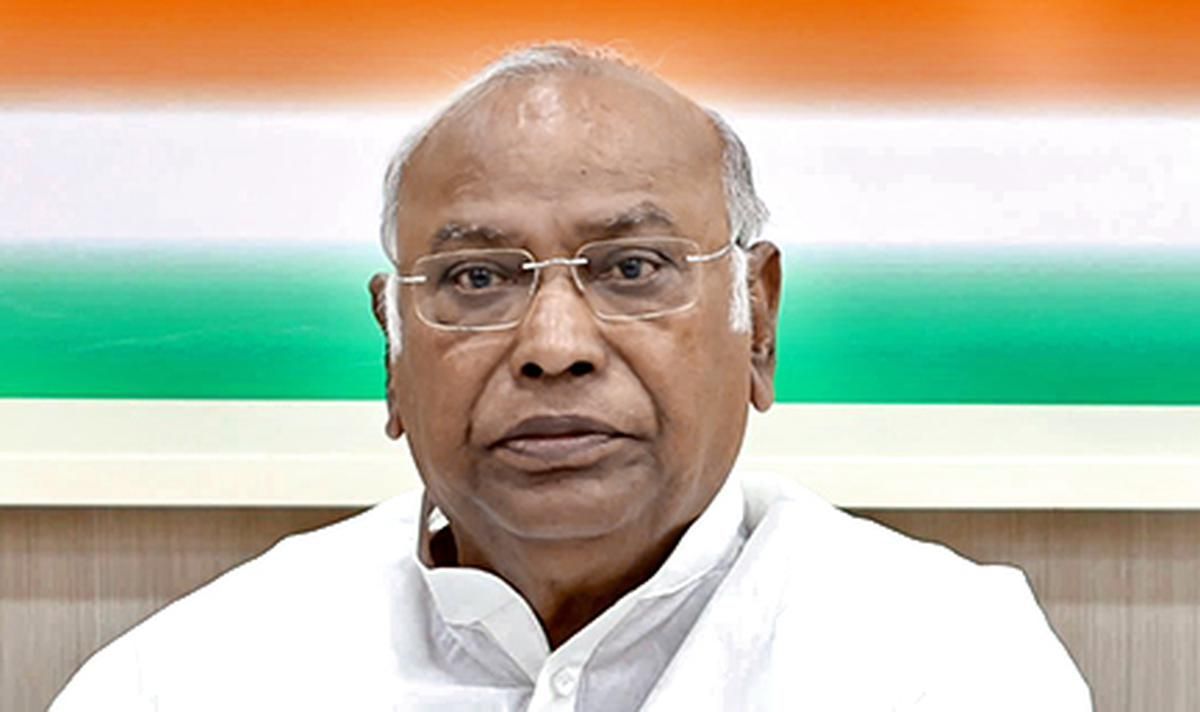
New Delhi: Participating in the debate on the Bill in the Rajya Sabha, Congress President Shri Mallikarjun Kharge on July 30, 2026, said that the Public Examinations Amendment Bill remained incomplete as it lacked robust provisions to prevent paper leaks. He demanded a legally-mandated annual examination calendar, a Supreme Court-monitored probe into police excesses against students, and the time-bound filling of government vacancies. He also said that Home Minister Amit Shah should take responsibility for the police brutality against student protesters and resign from his post.
He said that the government had failed to incorporate key suggestions made by the Opposition in 2024, forcing it to amend the law within two years of its enactment. He said that the proposed amendments still did not provide a strong mechanism to curb question paper leaks.
Leader of Opposition in Rajya Sabha Shri Mallikarjun Kharge urged the government to introduce a legally enforceable annual calendar for all examinations to end uncertainty and delays faced by students every year. He also demanded that all vacant government posts be filled in a time-bound manner.
He called for an independent probe by a high-level committee under the supervision of the Supreme Court into the police action against students during protests, saying accountability must be fixed.
He noted that over 100 students were injured, with one student on a ventilator and another facing the risk of losing eyesight. He also referred to firing on students with AK-47 gun in Bihar. Targeting Prime Minister Narendra Modi and Home Minister Amit Shah, Congress President said that the country deserved answers over the brutal police action. If the Home Minister could not answer the questions, he should resign, or else the Prime Minister should remove him from office, he said.
“Who ordered the lathi-charge? Who ordered the use of tear gas? Who authorised the use of pellet guns”, he asked adding, “Who were the people in plain clothes who assaulted the students?” Demanding the government to fix accountability, he questioned: who is the Delhi Police accountable to, under whose orders does the Rapid Action Force (RAF) of the CRPF operate, and who was the ultimate authority behind this entire sequence of events?
The country wants answers to these questions, Shri Kharge said, asserting, “If the Home Minister cannot answer them, he should resign.”
On examination reforms, Congress President Shri Mallikarjun Kharge pointed out that more than 152 paper leak incidents had occurred over the past decade but no major accused had been punished. He said that the main accused in the 2024 NEET paper leak case had received a clean chit, while in the 2026 NEET paper leak case, the CBI’s counsel did not appear during the first hearing in a Delhi fast-track court.
He said that replacing a minister alone would not reform the education system unless institutions, the National Testing Agency (NTA), the examination process and accountability mechanisms were overhauled.
Congress President said that repeated postponement of examinations, delayed results and paper leaks had pushed young people into severe mental stress, with recruitment processes remaining pending for years and candidates crossing the age limit for appointment.
He stated that according to the government, conducting a re-examination was the solution to the problem of paper leaks. However, more than two lakh students were unable to appear for the re-NEET examination. He added that repeated exams imposed heavy travel and accommodation costs on economically weaker families.
Raising the issue of unemployment, Shri Mallikarjun Kharge cited parliamentary committee data, saying that around one million teaching posts under the Samagra Shiksha scheme were vacant. He said that taking into account vacancies in central government departments, public sector undertakings and government-aided institutions, there were over three million vacant government posts across the country.
He further flagged that educational institutions were increasingly being staffed with people linked to the Rashtriya Swayamsevak Sangh, including appointments of Vice-Chancellors, and warned this was adversely affecting higher education and the country’s knowledge ecosystem.
He noted that the government spending on education had declined to around three per cent of GDP against the six per cent recommended by the Kothari Commission.
Indian National Congress
AICC Hq, Indira Bhawan, 9A Kotla Marg, New Delhi - 110002