

The Indian National Congress remains resolute in its vision for India’s workers: Congress President
Anti-Worker Agenda over Labour Codes
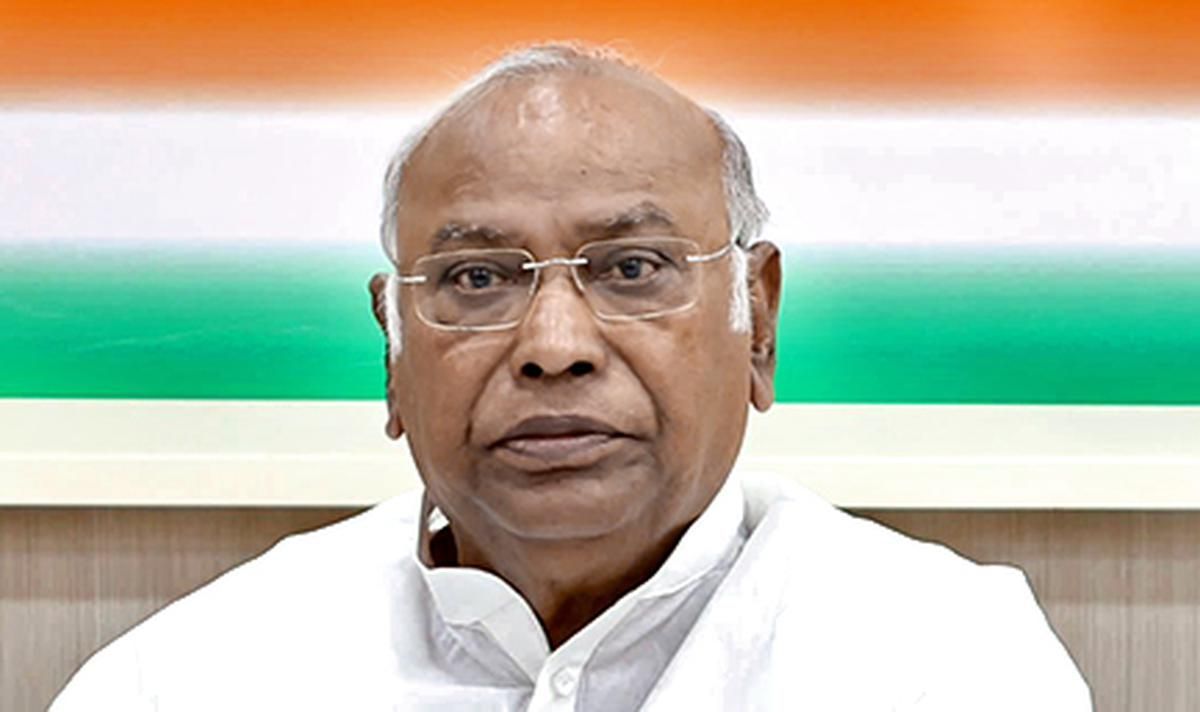
New Delhi: Congress President and Leader of Opposition in Rajya Sabha Shri Mallikarjun Kharge on May 11, 2026, launched a sharp attack on Narendra Modi-led government over the notification of the four labour codes, alleging the centre deliberately waited for the conclusion of Assembly Elections before moving ahead with what he described as anti-worker reforms. The complete statement is as follows:-
In its typical cowardly fashion, the Modi Government waited for the assembly elections to conclude before notifying the four anti-worker labour codes through a series of gazette notifications on 8 and 9 May, 2026. For crores of India’s workers, these codes promise a future of hire-and-fire policies, contract employment, and limited space for unionisation. It is important to note that the Modi Government drafted and implemented these anti-worker codes without any consultation. It has not even convened the Indian Labour Conference since 2015. These codes, which benefit only the PM’s industrialist friends, are the greatest setback for workers’ rights since independence.
- Code on Wages 2019 • This entire wage architecture is not ‘Worker-Centric’ but ‘Corporate-Centric’. • The Modi Government has dropped the specific criteria for calculating minimum wage (using calorie intake, clothing needs, rent, fuel costs, etc. as benchmarks). Instead, the criteria will be “separately specified by the central government by special or general order”. The minimum wage will no longer be set according to a set of guidelines and norms, but according to the arbitrary whims of the Modi Government. This will result in lower minimum wages. • Under new rules, the Basic Salary must be 50% or more of the total remuneration. The ‘take-home salary’ for employees will see a sharp reduction. • A complex single definition of ‘wages’ has turned salary structuring upside down, reducing allowances and creating massive confusion. • The new burden of additional costs and digital compliance on Micro, Small, and Medium Enterprises (MSMEs) poses a survival challenge. • Minimum wage protections exclude agricultural workers and domestic help.
- Occupational Safety, Health, and Working Conditions Code 2020 • Makes workplace safety a cost of business rather than a non-negotiable duty. • Introduces a ‘decriminalisation’ framework that allows safety violations – including accidents causing serious bodily injury – to be settled through monetary payment rather than criminal prosecution. • There is no concrete, mandatory model for safety measures like escorts, transport, and CCTV coverage for women working night shifts. • No provision for employer responsibility for the health and safety of contract labourers.
- Social Security Code 2020 • For 90% of India’s workers who are in the unorganised sector, this code has proven to be nothing more than a paperwork formality since small and micro enterprises receive exemption from certain provisions. • There is no clear model for funding, contributions, or insurance for gig workers. They are neither recognised as employees nor given full protection. Benefit levels and timelines are not clarified. • The role of welfare boards for construction workers and other categories has been limited, stopping the portability of benefits. • Social security has been turned into a “Data Entry Exercise” instead of a constitutional right. 90% of the country’s workers are being given an Identity Card, but they get no legal guarantees or actual benefits.
Industrial Relations Code 2020 • Industrial relations have been shifted from ‘Worker Rights’ to ‘Corporate Flexibility.’ The rules for forming and recognising trade are so stringent that the power of collective bargaining has been effectively destroyed. • Companies with up to 300 employees no longer need government permission to fire workers (Retrenchment/Layoff). Previously, this limit was 100 employees. This has brought job security to its lowest level in 30 years. • A mandatory 60-day notice is now required before any strike. Furthermore, if a matter is pending in conciliation, the strike is deemed illegal. Effectively, the right to protest has been snatched away. • The code promotes ‘Fixed Term’ (contractual) employment rather than regular jobs. The Indian National Congress remains resolute in its vision for India’s workers. We are committed to our five-point Shramik Nyay agenda:
Restoration of MGNREGA and its extension to urban areas.National minimum wage at Rs. 400 per day, including for MGNREGA.- ‘ The Right to Health law that will provide universal health coverage of Rs. 25 lakhs.
Comprehensive social security for all unorganised workers, including life insurance and accident insurance.A commitment to stop contractualisation of employment in core Government functions, and to review the Modi Government’s dilution of labour laws.
Indian National Congress
AICC Hq, Indira Bhawan, 9A Kotla Marg, New Delhi - 110002