



Congress did its best to prevent Partition
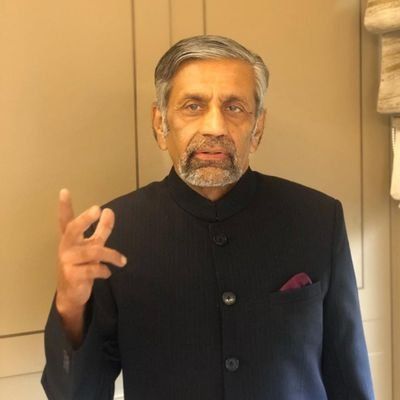
- Capt. Praveen Davar
The Partition of India is one subject that refuses to fade away. Many books have been written on this topic in many languages – Hindi, English, Urdu – and may continue to be written for decades to come.
A quarter of a century after Independence, Larry Collins and Dominique Lapierre, the authors of Freedom at Midnight, interviewed Lord Mountbatten at his mansion in Southampton and documented the extensive talks in two volumes—’Mountbatten and the Partition of India’ and ‘Mountbatten and Independent India’. Answering a pointed question on who he thought was responsible for partition, Mountbatten reveals that though Gandhiji was totally opposed to partition, he was helpless. “Nehru was horrified by the idea of partition…. Gandhi had no key at all…. But it wasn’t Gandhi, it wasn’t Nehru, it was Jinnah and Patel. They were the two people.” Mountbatten of course, hides the fact that he was the third. Partition wouldn’t have been possible if Mountbatten had not come fully prepared to implement the British policy of “Divide and Quit” soonest. But before we go further, let us briefly recapitulate the events leading to partition. How did the idea of Pakistan originate? In his presidential address at the Muslim League session in December 1930, poet Muhammad Iqbal talked of the creation of a “Muslim India” comprising Punjab, NWFP, Sind and Baluchistan. He said that these provinces should be amalgamated to form a consolidated North-West Muslim state where 70 million Muslims could live and find their destiny. Perhaps Iqbal thought of such a consolidated state as a strong unit within the Indian federation rather than as a separate, independent state.
Rahmat Ali, a student in England, did not like this vagueness in Iqbal’s formulation nor did he think that the Communal Award of Sir Ramsay MacDonald, announced in August 1932, under which the Muslims were assured control over Bengal and Punjab, could fully safeguard Muslim interests. So, he formulated the idea of Pakistan which would be a separate, independent Muslim state consisting of Punjab, NWFP, Kashmir, Sind and Baluchistan. Meanwhile, Veer Savarkar and the RSS had begun propagating that Hindus and Muslims were two cultures who could not coexist as one nation. Hindu and Muslim communalism fed on each other.
On March 26, 1940, the Muslim League officially passed the Pakistan resolution. This resolution approved of the demand for an independent state for Muslim-majority provinces in the north-western and eastern zones of India. On April 13, 1940, Nehru described the Pakistan resolution as a mad scheme aimed at denationalising the country. The 1942 Quit India Movement, however, led to the Muslim League gaining tremendous strength at the cost of the Congress whose leaders were confined to jails for nearly two years and more.
In March 1946, the Labour government which had taken over from the Conservatives, sent to India a Cabinet Mission consisting of Lord Pethick-Lawrence, Sir Stafford Cripps and A.V. Alexander. On May 16 the Cabinet Mission presented its proposals, which proposed a loose federation with the Union having limited powers: and in which the provinces were divided into three groups, in two of which the Hindus and the Muslims respectively would have their majority, and in the third, representation would be nearly equal.
Before the Cabinet Mission left India on June 29, apart from the May 16 long-term plan, it also announced a June 16 short-term plan about the composition of the interim government. It was to consist of 14 members—five from the Congress, five from the League and one each from the Sikhs, the Scheduled Castes, the Indian Christians and the Parsis. The parity between the Congress and the League which this June 16 plan envisaged was unacceptable to the Congress, and on June 24 it rejected this plan, but accepted the May 16 plan. At this stage, Pandit Jawaharlal Nehru took over as the Congress President of the Party from 1940 to 1946. Some of the statements made by Nehru on his interpretation of the Cabinet Mission Plan provoked Jinnah to reject the plan. S. Gopal, the biographer of Nehru, however, defends him. “It is unfair to blame Jawaharlal merely because Jinnah used this as the chance to break out of the cage of acceptance.”
After the League rejected the Cabinet Mission Plan, on July 29 the Congress accepted even the June 16 plan regarding the interim government because it thought that as the League was not coming in, the objection as to Congress-League parity in the interim government had become academic. This new development provoked Jinnah to give the call for direct action on August 16, a day which H.S. Suhrawardy, League Chief Minister of Bengal declared as a public holiday. Armed communal groups then went on looting and killing in Calcutta while the police remained inactive, and the army was not called. Within four days more than 5,000 lives were lost. The riots spread to Noakhali and then to Bihar and Uttar Pradesh as also to Rawalpindi and Lahore.
Communal riots and unchained animosity were unleashed all over Punjab and the governor took over the province. Shocking atrocities that outraged humanity were committed, and the toll of life and property was enormous. The British officials had lost interest in administration and preferred to be passive. They had the power to prevent the outbreaks but would not exercise it. The interim government, which the Muslim League belatedly joined, lacked unity of purpose and administration was breaking down. The Congress and the League members distrusted each other and could not take joint action to stop this carnage. Sardar Patel noticed that British officials took full advantage of the split in the Council. Many of them had a soft corner for the Muslim League.
The Congress Working Committee took a realistic view and on March 8 resolved that: “During the past seven months India has witnessed many horrors and tragedies which have been enacted in the attempt to gain political ends by brutal violence, murder and coercion. The tragic events have demonstrated that there can be no settlement of the problem in the Punjab by violence and coercion, and that no arrangement based on coercion can last. Therefore, it is necessary to find a way which amounts to the least compulsion. This would necessitate division of the Punjab into two provinces so that the predominantly Muslim part may be separated from the predominantly non-Muslim party.”
In Bihar to bring down communal animosity, Gandhiji was in shock when he heard of the resolution. He immediately wrote to Patel, “Try and explain to me your Punjab resolution if you can. I cannot understand it.” Patel replied: “It is difficult to explain to you the resolution about the Punjab. It was adopted after the deepest deliberation. Nothing has been done in a hurry or without full thought. That you have expressed your views against it, we learn only from the papers. But you are of course entitled to say what you feel right.”
On March 24, 1947, Lord Mountbatten took over as the Viceroy. On April 15, he prevailed upon Gandhiji and Jinnah to issue a joint appeal to Hindus and Muslims to cease violence and return to sanity. But it had little effect on people’s passions which had been raised to a revengeful pitch. Nehru and Patel had already been reconciled to partition as the only alternative to chaos and anarchy. Mountbatten already knew that partition was inevitable. He ascertained that Jinnah was willing to accept Pakistan on the basis of division of Punjab and Bengal. With commendable speed Mountbatten produced a plan of two independent dominions, got the approval of the major parties of the British government and announced it on June 3. The excellent rapport which Nehru enjoyed with Mountbatten ensured that though Jinnah got his Pakistan, it was only less than half of what he had demanded originally. Half of Bengal, Punjab and the whole of Assam remained with India. It was with great reluctance that the Congress leaders had become reconciled to the partition of the country. Nehru felt that the compulsion of events had led them to this course. Patel felt that the most urgent task was to build a strong central government to check the drift to anarchy and chaos. Partition alone would secure this and it had become inevitable. He argued that it was wisdom to remove a diseased limb lest the whole body should suffer. Larry Collins and Dominique Lapierre record in Freedom at Midnight: “Patel had been prepared to concede partition even before Mountbatten’s arrival. He was ageing, he’d suffered two heart attacks, and he wanted to get on with it, to end the ceaseless debates and get down to the task of building an Independent India.”
But what is the view of Pakistan historians? Ayesha Jalal writes: ‘It was Congress that insisted on partition. It was Jinnah who was against partition.’ (The Sole Spokesman: Jinnah, The Muslim League and The Demand for Pakistan. Cambridge: Sange Meel Publication).Yasser Latif Hamdani writes in his recent book Jinnah – A Life: ‘At 11p.m. Jinnah met Mountbatten again, trying to convince him not to announce the Partition plan publicly, saying that the Muslim League’s council may not accept it. Mountbatten warned him that he might lose Pakistan for good, to which Jinnah replied coolly: “What must be, must be.” The so-called triumph of his life, the crowning glory of his political career, if biographers and historians are to be believed, was thus imposed on him through an act of bullying on part of Mountbatten.’ Jinnah - A Life by Yasser Latif Hamdani, MacMillan).
This view is corroborated by Dr. MC Davar, a revolutionary freedom fighter who made herculean efforts to prevent partition even after the June 3 Plan. ‘Dr. Davar held, more than anyone else, Mountbatten responsible for the Partition believing that he had been “sent with the purpose that he had to divide India somehow or the other”...as it was old plan of the British to divide India into Hindu India and Muslim India.’ (He Almost Prevented Partition- The Life and Times of Dr. M.C. Davar by Praveen Davar, SPEAKING TIGER BOOKS).
On August 1, 1947, the stalwart who became the first Prime Minister of independent India, Jawaharlal Nehru wrote to Sardar Patel formally inviting him to join his Cabinet: “This writing is superfluous because you are the strongest pillar in the Cabinet.”
Sardar Patel wrote back to Pt. Nehru: “My services will be at your disposal. I hope for the rest of my life and you will have unquestioned loyalty and devotion from me in the cause for which no man in India has sacrificed as you have done. Our combination is unbreakable and therein lies our strength.”
If the unbreakable combination of Nehru and Patel, and the moral might of the Mahatma, could not prevent partition, nothing else would have. The top leadership of the INC tried its best to prevent partition but could not succeed as the umpire (the British govt.) was not impartial and just in dealing with the two warring sides – INC and the Muslim League.
(The writer is Chairman, AICC Vichar Vibhag, columnist, author and Editor, The Secular Saviour)
Indian National Congress
AICC Hq, Indira Bhawan, 9A Kotla Marg, New Delhi - 110002