

Congress Party has stood firm with India’s working people
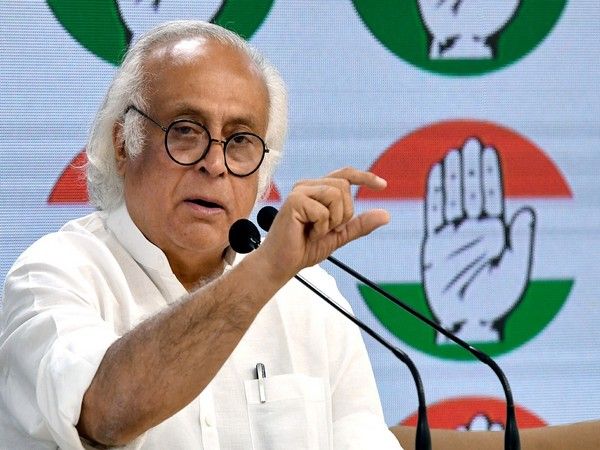
- Jairam Ramesh
The last eleven years have seen the Modi Government preside over the widespread depredation of India’s workers, aided and abetted by the Government’s own policies. There have been at least five major injustices inflicted upon workers in India over the last decade.
- Declining real wages: Labour Bureau data shows that between 2014-15 and 2022-23, real wages of agricultural workers rose by an annual average of only 0.8%, and just 0.2% for non-agricultural workers. For construction workers, real wage growth was actually negative. Even salaried workers have not been spared – according to PLFS data, after adjusting for inflation, salaried workers made 12% less in 2022-23 than they did in 2017-18.
- Anti-Workers Labour Codes & Rising Contractualization: The Modi government’s four new labour codes of 2019-20 made employment more unstable for all workers. Contractualization has become rampant, both in the public and private sectors. According to the Annual Survey of Industries, 98.4% of factories employed contract workers in 2019-20, up from 28.3% of factories in 2011.
- Deindustrialisation: The Modi government has systematically reversed India’s economic transformation, sending workers from factories back to farms. From 2011-12 to 2022, the total number of workers in manufacturing was stagnant, going from approximately 6 crore to just about 6.3 crore. Since 2018-19, the number of agricultural workers has gone up by 6 crore.
- Decline in salaried jobs, increasing “self-employment”: Self-employment rose from 51% in 2017-18 to a shocking 57% in 2022-23, while salaried work fell from 23% to 21%. The number of unpaid workers in the self-employed category has shot up from about 40 million in 2017-18 to 95 million in 2022-23. The mass unemployment crisis has forced workers to move into low-paying or non-paying ‘jobs.’
- Throttling MGNREGA: The budget allocation for MGNREGA has been slashed repeatedly and in 2023-24 it was at only 0.25% of GDP – the lowest in its history. As a result, the Modi government has suppressed MGNREGA wages. For instance, since 2014, the daily wage rate for Uttar Pradesh has increased just 4% per year, when inflation has been much higher than that. As part of its ‘Nyay Patra’ for the Lok Sabha Elections 2024, the Indian National Congress had announced the five-point Shramik Nyay Guarantees. The guarantees were as follows –
- Shram ka Samman: National minimum wage at Rs. 400 per day, including for MGNREGA workers.
- Sabko Swaasthya Adhikaar: Right to Health law that will provide universal health coverage of Rs. 25 lakhs, including free essential diagnostics, medicines, treatment, surgery, and rehabilitative and palliative care.
- Shehri Rozgar Guarantee: Employment guarantee act for urban areas, with a focus on building public infrastructure, making cities resilient to climate change, and bridging gaps in social services.
- Samajik Suraksha: Comprehensive social security for all unorganised workers, including life insurance and accident insurance.
- Surakshit Rozgar: A review of the anti-worker labour codes passed by the Modi Government, and a commitment to stop contractualization of employment in core Government functions. The Congress Party has stood firm with India’s working people since its inception, with Mahatma Gandhi himself guiding the historic Ahmedabad Mill Workers Strike in 1918 and several INC leaders like Sardar Vallabhbhai Patel, Pandit Jawaharlal Nehru, VV Giri, and Babu Jagjivan Ram being associated with the labour movement. On the occasion of International Workers Day, the Indian National Congress reaffirms its allegiance to India’s working people and renews its commitment to the five-point Shramik Nyay Agenda. The path-breaking Gig Worker welfare measures in Telangana and Karnataka are only the beginning – the Indian National Congress envisions safe and secure employment for all of India’s working people.
Based on statement issued by Shri Jairam Ramesh, MP, General Secretary (Communications), AICC on May 01, 2025
Indian National Congress
AICC Hq, Indira Bhawan, 9A Kotla Marg, New Delhi - 110002