



Green Revolution transformed India from ‘beggar bowl’ to ‘grain bowl’
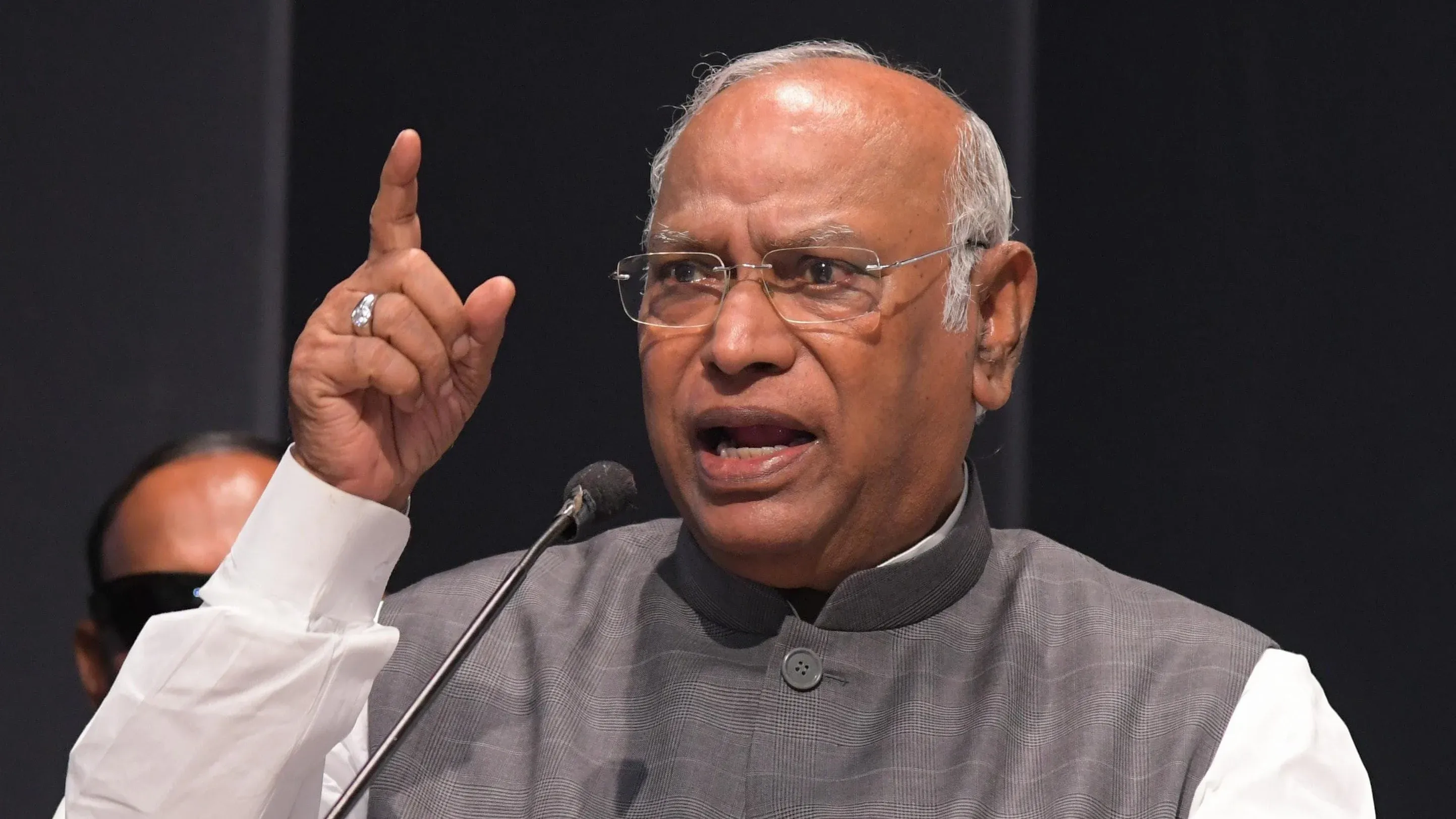
Dr Y.S. Rajasekhara Reddy Award 2026 Ceremony
New Delhi: Congress President and Leader of Opposition in Rajya Sabha Shri Mallikarjun Kharge, delivered a speech at Dr Y.S. Rajasekhara Reddy Award 2026 Ceremony at Constitution Club of India, New Delhi, on September 2, 2026. Congress President Shri Mallikarjun Kharge conferred the Dr YS Rajasekhara Reddy Award 2026 on the MS Swaminathan Research Foundation (MSSRF) and said India’s development model must ensure dignity, security and opportunity for farmers, rural communities and the poor.
Speaking at the award ceremony, Congress President Shri Kharge said that rural India cannot be remembered only during droughts, floods, crop failures or elections. He said that climate change had made the need for sustainable and inclusive rural development more urgent, with farmers and rural communities increasingly facing floods, droughts, cyclones and uncertain weather patterns. Drawing a parallel between former Andhra Pradesh Chief Minister YS Rajasekhara Reddy and agricultural scientist MS Swaminathan, Congress President said that both believed that development had little meaning unless it reached people at the margins.
“Rajasekhara Reddy and Dr Swaminathan shared a belief that development must ultimately serve the dignity of ordinary people,” he said.
He said that the MSSRF had carried forward Swaminathan’s vision since its establishment in 1988 by working with rural and tribal communities on farming practices, technology, market access and livelihoods, besides areas such as nutrition, women’s empowerment, biodiversity, climate resilience and digital inclusion.
“What I find particularly powerful about this work is that it takes knowledge out of laboratories and institutions and puts it in the hands of ordinary people,” Congress President Shri Mallikarjun Kharge said.
On climate change, the Congress President said that its impact could no longer be viewed merely as an environmental issue.
“A lost crop, a lost livelihood, a child’s education being interrupted, or a family falling into debt” could be consequences of climate-related disruptions, he said, adding that “it is not just good science, it is social justice.”
Congress President Shri Mallikarjun Kharge said that rural communities needed a development model that provided them security before a crisis struck.
He raised a series of questions on whether farmers were getting fair markets, rural family’s decent livelihoods, women economic independence and tribal communities’ access to technology and opportunity. He also stressed the need for infrastructure and public services in villages so that young people could build their futures there.
He said that rural development had been a core commitment of the Congress’ governance philosophy, citing the land reforms associated with Indira Gandhi, Rajiv Gandhi’s technology missions, the empowerment of Panchayati Raj institutions and social-security programmes implemented during the UPA period.
He specifically referred to the National Food Security Act and the Food for Work initiative under the stewardship of former Congress President Smt. Sonia Gandhi.
“The commitment to rural India has remained at the heart of the Congress’ approach to governance,” he said, describing YS Rajasekhara Reddy’s welfare-oriented administration in Andhra Pradesh as a powerful expression of the same philosophy.
Congress President Shri Mallikarjun Kharge recalled his personal association with MS Swaminathan, describing him as an iconic scientist whose vision went beyond increasing agricultural production.
He traced the origins of the Green Revolution to India’s severe food shortages in the 1960s, when the country was grappling with famines and was dependent on food imports. He said that during the final years of Jawaharlal Nehru’s tenure and the brief tenure of Lal Bahadur Shastri, India’s agricultural policy began moving from an institutional approach towards a broader technological and scientific strategy.
“The Green Revolution subsequently became a major government priority under Indira Gandhi’s leadership,” he said.
He noted that Swaminathan himself wrote that Indira Gandhi understood that technology alone could not transform agriculture and had to be supported by irrigation, electricity, improved seeds, fertilisers, credit and effective extension services. He said that the Green Revolution helped India move from a “beggar bowl” to a “grain bowl”. He also recalled Swaminathan’s description of Indira Gandhi as “the most successful warrior against hunger of this era.”
Congress President Shri Mallikarjun Kharge said that Swaminathan’s contribution was not confined to increasing food production. The agricultural scientist understood that rural development was ultimately about the quality of life of people in rural India and that development had to reach villages, tribal hamlets, fishing communities and small farmers.
Andhra Pradesh Chief Minister Revanth Reddy and AICC General Secretary Jairam Ramesh also spoke on the occasion.
Also present on this occasion were Ms. Meenakshi Natarajan, Shri Mallu Bhatti Vikramarka, Shri Mahesh Gowda, Shri Uttam Reddy, Shri Sridhar Babu, Shri Gaddam Vivek, Shri Thummala Nageswara Rao, Shri Raghuveera Reddy, Shri Rudra Raju, Shri K.V.P. Ramachandra Rao, who is also a founder member and Chairman of the Pradesh Committee and our senior leader Shri Digvijaya Singh, and our other Party leaders.

Indian National Congress
AICC Hq, Indira Bhawan, 9A Kotla Marg, New Delhi - 110002