



Gandhi’s Visionary Thought: Machines, Capital, Technology, and the Imperative of Social Justice
- Saurabh Tyagi
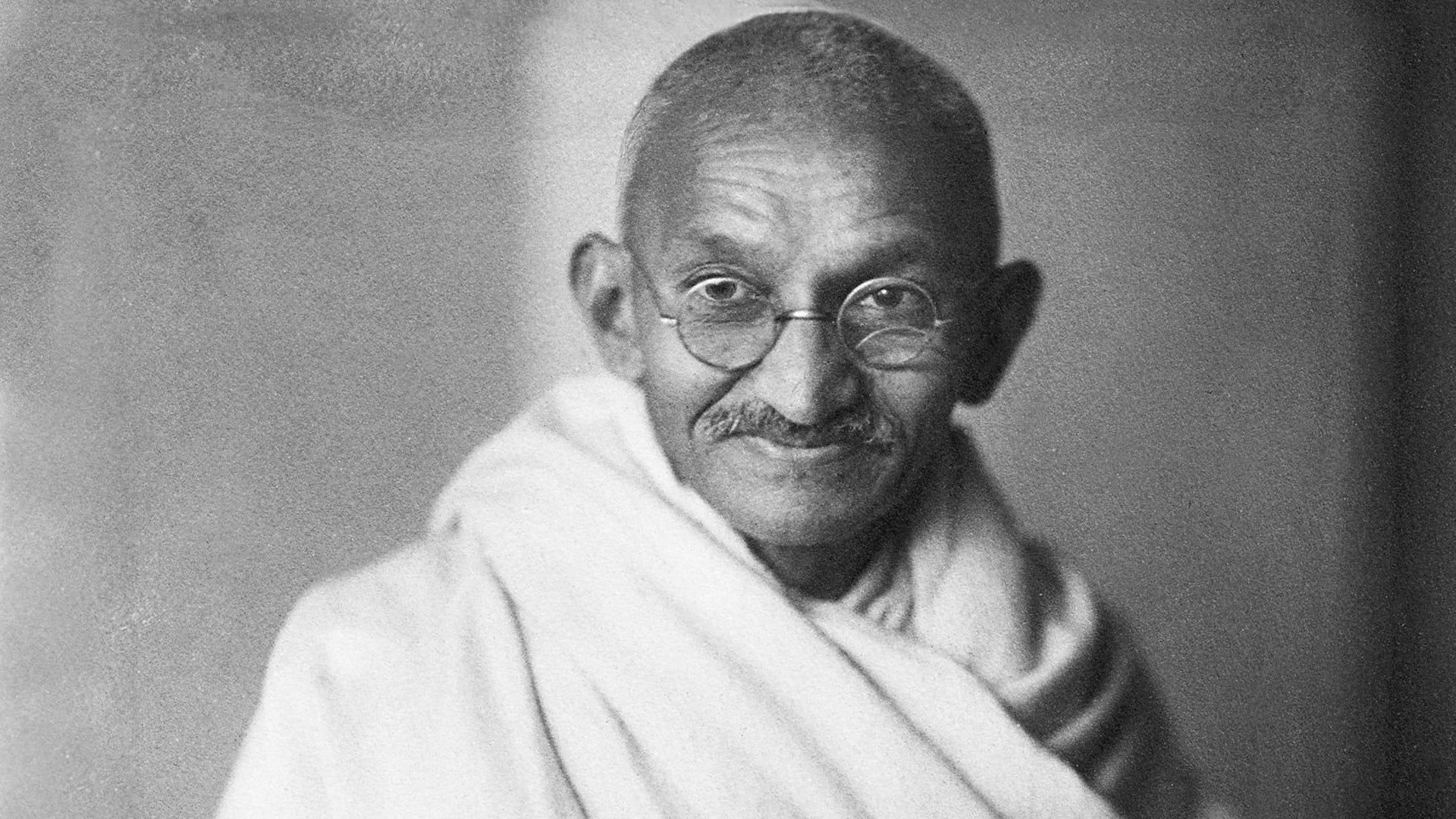
To regard Mahatma Gandhi merely as a leader of a bygone era would be a profound injustice to the depth and foresight of his ideas. His thinking transcended the boundaries of his time. Gandhi possessed a remarkable understanding of the foundational structure of modern civilization—one rooted in machines, capital, and the concentration of power. Today, as automation, robotics, and artificial intelligence rapidly reshape economic systems and social relations, Gandhi’s cautions and insights emerge as not only relevant, but urgently necessary.
Gandhi was never inherently opposed to machines or technology. His resistance was directed toward the domination of machines over human beings—the replacement of human labor, dignity, and autonomy by mechanical efficiency. He believed that the most sophisticated and meaningful “machine” in existence is the human body itself, which harmonizes physical labor with conscience, compassion, and moral reasoning. Gandhi’s central concern was that this living, ethical machine should never be reduced to a subordinate of artificial systems devoid of moral responsibility. Before the advent of large-scale automation, factories, companies, and production units relied heavily on human labor. A substantial workforce sustained industrial activity, and profits were distributed in a manner that ensured wages and livelihoods for workers, with the remaining surplus accumulating to owners. While imperfect, this system maintained a minimal balance between labor and capital.
In the contemporary era, this balance has eroded dramatically. Automation, robotics, and artificial intelligence have significantly reduced the need for human labor, even as productivity and profits have increased exponentially. However, these rising profits are now overwhelmingly concentrated in the hands of corporate owners and capital centers. Workers’ participation in the economic gains has diminished to a negligible level. The inevitable outcome of this transformation is the rapid intensification of economic inequality.
The divide between wealth and poverty is expanding at an alarming pace. On one side stand the owners of technology and capital, accumulating unprecedented riches; on the other stand millions facing unemployment, precarity, and social marginalization. If this trajectory continues unchecked, vast sections of society may soon fall into a new form of servitude—not physical slavery, but a subtler and more pervasive bondage rooted in technological dependence, debt, and structural exclusion.
In this context, the central challenge before society is to restore equilibrium between economic freedom and social equality. The crucial question is how the benefits of technological advancement can be shared broadly rather than monopolized by a privileged few. Gandhi’s philosophy offers a compelling answer: the decentralization of power. This decentralization extends beyond political authority. It encompasses industrial control, access to skills, and ownership of productive capacities. The air, water, land, and natural resources of a nation belong equally to all its citizens. Yet, when political power enables the transfer of control over these resources to large industrial interests, ordinary citizens are deprived of their rightful share. Their participation is reduced to indirect benefits, such as taxation, while the direct economic gains remain concentrated at the top.
As production increasingly depends on robotics, automation, and artificial intelligence, a fundamental ethical question arises: what share do citizens have in the wealth generated through these technologies? If people possess a moral claim over natural resources during their lifetime, then it follows that the profits derived from technology-driven exploitation of those resources cannot remain the exclusive domain of corporate owners. To address present imbalances and uphold ethical responsibility, such profits must be redistributed through deliberate and transparent public policy. If machines are replacing human labor, then the economic returns of that displaced labor must rightfully reach those who bear the burden of unemployment.
Governments must therefore engage seriously with the idea of distributing a portion of technology-generated wealth among unemployed and displaced youth—not as charity, but as an enforceable right. Simultaneously, comprehensive investment in skill development is essential, enabling individuals to adapt meaningfully to a transforming economy. Decentralized skill training, the promotion of local industries, and community-based production models represent practical steps toward inclusive economic participation.
For Gandhi, Swaraj was not confined to political independence. It embodied economic self-reliance and moral autonomy. He envisioned a society in which the means of production were widely distributed, preventing the excessive accumulation of power in a few hands. In the modern context, this vision translates into the democratization of technology and the social accountability of technological control.
The experience of several European nations demonstrates that technological advancement can coexist with social justice. Strong systems of education, healthcare, unemployment support, retraining, and social security illustrate how the state can ensure a dignified life for its citizens. In a country like India—characterized by vast population and deep structural inequalities—these principles demand even greater urgency and commitment.
It is undeniable that technological progress cannot be reversed. Machines and artificial intelligence are now integral to modern life. Yet, society retains the power to determine the purpose they serve. Gandhi’s enduring wisdom reminds us that without the decentralization of power, resources, and technology, the future risks becoming more unequal, unjust, and unstable.
Ultimately, the defining question remains unchanged: will society elevate machines and profit above human values, or will it place human dignity at the center and shape technology accordingly? Gandhi’s answer was unequivocal. Even today, that answer stands before us—not as an abstract ideal, but as a necessary path forward.
The author is a National Joint Co-ordinator, All-India Kisan Congress

Indian National Congress
AICC Hq, Indira Bhawan, 9A Kotla Marg, New Delhi - 110002