



Indira Gandhi is called the ‘Iron Lady’ for a Reason
- Dr. Shashi Kumar Singh Ph.d., D.litt.
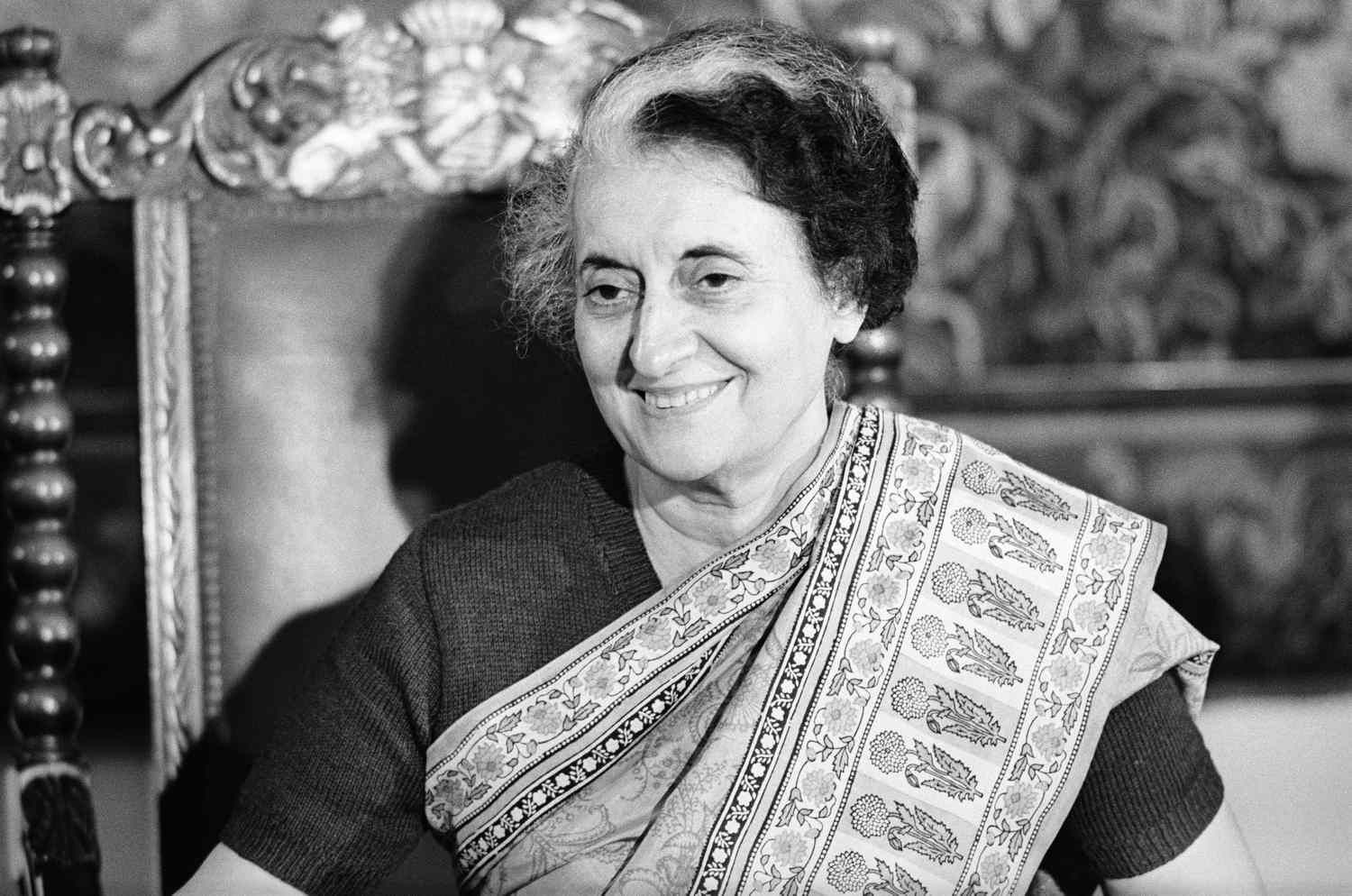
Smt. Indira Gandhi was India's first and only woman Prime Minister, leading the country from 1966 to 1977 and again from 1980 to 1984. Known as the ‘Iron Lady’, she was known for her strong will, decisive decisions, and bold actions in the national interest that made India a strong and self-reliant nation. Despite being the daughter of Jawaharlal Nehru, she carved out her own political identity, initiating revolutionary changes in poverty alleviation, economic reforms, social justice, and foreign policy. Born on November 19, 1917, in Allahabad, she actively participated in the freedom struggle from childhood, establishing the ‘Bal Charkha Sangh’ and the ‘Vanar Sena’. She was arrested during the Quit India Movement of 1942. Working with Pandit Nehru, she participated in international conferences. She became Congress President in 1959. During her tenure, India overcame economic crises, achieved self-reliance, achieved military victories, and established a strong presence on the global stage. Although some of her decisions were criticized, her contributions established India as a modern, progressive nation, promoting women's rights, environmental protection, education, and the nuclear program. She was assassinated on October 31, 1984, but her legacy continues to inspire millions. In this article, we will break down some of her significant contributions into two main areas: national and international affairs. Ultimately, Smt. Indira Gandhi transformed India into a developed and prestigious nation.
National Section: Revolutionary Changes in the Country's Policies
Smt. Indira Gandhi's national policies focused on poverty alleviation, economic reform, social justice, and education. She initiated several important initiatives to make India self-reliant, including reforms in agriculture, banking, social welfare, and education. These policies strengthened rural India, reduced economic inequality, and promoted inclusive growth in the field of education. Under her leadership, India not only faced economic crises but also took concrete steps towards social and educational equality.
The Green Revolution: Revolutionizing Agriculture and Boosting Food Grain Production
The Green Revolution, launched during the tenure of Smt. Indira Gandhi, made India self-sufficient in food grains. In the late 1960s and 1970s, the use of high-yielding seeds, improved irrigation, fertilizers, and pesticides led to a manifold increase in wheat and rice production. This revolution was particularly successful in states like Punjab, Haryana, and Uttar Pradesh, where food grain production increased by 37 percent between 1967-68 and 1970-71, and imports fell from 10.3 million tons to 3.6 million tons. Indira Gandhi doubled agricultural investment, provided subsidies, and strengthened the Minimum Support Price (MSP) system, boosting farmers' incomes and significantly increasing the number of tractors. The 1972 drought presented challenges, but overall, the revolution succeeded in transforming India from a ‘beggar's bowl’ to a ‘grain bowl’, reducing hunger and accelerating economic growth. It expanded the agricultural area, promoted double cropping, and increased the use of chemical fertilizers, which remain the foundation of India's food security even today. It also strengthened the rural economy and provided economic stability to millions of farmers.
A symbol of the upliftment of the poor
In the 1971 elections, Smt. Indira Gandhi made poverty alleviation a national agenda by launching the slogan ‘Garibi Hatao’. This slogan became the voice of the poor and promoted rural development programs. Under this slogan, land reforms, employment generation, and social welfare schemes were initiated, leading to a landslide victory for the Congress Party. This slogan made poverty a central political issue, with Indira Gandhi adopting ‘Garibi Hatao’ as a counter to her opponents' ‘Indira Hatao’. Its impact was so profound that poverty alleviation was prioritized in the Fifth Five-Year Plan. Although critics consider it populist, it took significant steps toward social justice, promoting employment and self-reliance, and instilling hope in rural India. This slogan not only transformed the political landscape but also refocused social and economic policies in favour of the poor.
Bank Nationalization for the Poor: The Beginning of Financial Inclusion
In 1969, Smt. Indira Gandhi nationalized 14 major banks, bringing banking services to rural and poor areas. The aim was to eliminate the control of a few wealthy individuals and provide affordable credit to farmers, small entrepreneurs, and the poor. This move supported the Green Revolution, increased the number of bank branches five-fold, and significantly contributed to poverty reduction. Although criticized for its economic efficiency, it was highly successful politically and laid the foundation for financial inclusion. In 1980, six more banks were nationalized, further strengthening the rural economy. This move, covered banks with deposits exceeding 85 percent and promoted social banking, benefiting small farmers, artisans, and women entrepreneurs. This policy integrated rural India into the economic mainstream and promoted socio-economic equality.
20-Point Program for the Poor: Comprehensive Socio-Economic Development
Launched in 1975, the 20-Point Program provided a structured approach to poverty alleviation. It focused on 20 key areas: controlling prices of essential commodities, eliminating bonded labour, land reforms, irrigation, drinking water, health, housing, education, and employment. The program implemented the slogan ‘Garibi Hatao’ (Remove Poverty) and brought about widespread changes in rural India, including eliminating bonded labour and controlling black marketing. It was revised in 1982 and 1986, making it more effective and expanding it to 65 items. The program increased agricultural and industrial production, improved public services, and cracked down on tax evaders and black marketers, raising the standard of living for millions. This program was a revolutionary step for rural India, promoting socio-economic equality and bringing the poor into the mainstream.
Bold Steps for National Stability
In 1975, faced with political instability, strikes, economic challenges, and internal disorders, Smt. Indira Gandhi declared a state of emergency, which lasted until 1977. This measure was necessary to restore discipline in the country, reduce inflation, and revive the economy. Reforms such as the 20-Point Program were implemented during the emergency, which were successful in energizing the economy and curbing corruption. Smt. Indira Gandhi described it as necessary to safeguard democracy, as it increased discipline, strengthened national unity, and brought economic stability. Although criticized, Indira Gandhi considered it a necessary step for the nation's security. During this period, trains ran on time, strikes ended, industrial production increased, and crime rates decreased, presenting India as a disciplined and progressive nation.
Foundation for Inclusive Growth
Smt. Indira Gandhi considered education the foundation of social and economic progress and took numerous steps to extend it to rural and disadvantaged sections. Education was prioritized under the 20-Point Program, which expanded the number of schools to promote primary and secondary education and expanded schools in rural areas. She particularly emphasized girls' education and enacted policies to expand educational opportunities for women, such as the Equal Remuneration Act of 1976, which also promoted gender equality in education. The Indira Gandhi National Open University (IGNOU), named after her in 1985, reflects her vision for education, although it occurred after her death. Technical education was also promoted during her tenure, with support for the Indian Institutes of Technology (IITs) and other technical institutions. Her efforts in education increased literacy rates in rural India and strengthened social inclusion.
Economic Reforms and Social Justice
Smt. Indira Gandhi abolished the Privy Purse, a bold step to end the privileges of royal families. This was implemented through the 26th Constitutional Amendment in 1971. She nationalized coal mines (1971) and textile mills (1974), implemented FERA (1974), and emphasized women's rights. These reforms promoted social justice. In addition, measures such as the nationalization of general insurance (1972), the MRTP Act (1969), higher tax policies, the devaluation of the rupee (1966), improvements in women's rights (the Equal Pay Act of 1976), the Wildlife Protection Act (1972), the Pokhran nuclear tests (1974), and the White Revolution (Operation Flood of 1970) made India economically strong and socially just. These policies played a key role in transforming India into a modern, inclusive, and self-reliant nation.
India's Strong Presence on the World Stage
Smt. Indira Gandhi's foreign policy was based on non-alignment, but she adopted a firm and bold stance in defending India's interests. Under her leadership, India faced global challenges and emerged as a champion of the Third World. She raised India's image on the international stage to unprecedented heights, where she boldly resisted pressure from major countries and amplified the voice of developing nations. Her diplomacy transformed India into an independent, influential, and confident nation that maintained balance during the Cold War and worked for global peace. Indira's foreign policy not only made India a regional power but also gave it a voice on the global stage that could challenge even larger nations. She established India as a power that was neither subservient to the Eastern nor Western blocs, but stood on the global stage with its own independent policies.
Mother of the Non-Aligned Movement
Smt. Indira Gandhi is considered the principal leader of the Non-Aligned Movement (NAM). She raised the economic and political grievances of developing countries on the global stage and provided a moderate and effective direction to NAM. By chairing the NAM Summit held in Delhi in 1983, she established India as a strong and influential leader on the global stage. This summit was attended by 101 countries, and Indira Gandhi emphasized issues of development, peace, and cooperation. She united NAM on the five principles of decolonization, economic development, disarmament, detente, and democratization, making the movement a strong voice for Third World countries. Indira Gandhi brought NAM closer to the Soviet Union, establishing India as a balanced and independent power during the Cold War. Her assassination dealt a major blow to NAM, as she was the backbone of the movement.
Firmness and Strategic Skill in the 1971 War
During the 1971 Bangladesh Liberation War, the United States openly supported Pakistan and attempted to pressure India by deploying its Seventh Fleet in the Bay of Bengal. Smt. Indira Gandhi responded decisively to this challenge and completely thwarted American pressure by signing the Indo-Soviet Treaty of Friendship with the Soviet Union in 1971. She wrote a letter to US President Richard Nixon, making it clear that India considered the United States a friend, but not a boss, and that India was capable of shaping its own destiny. Nixon called her "Old Witch," and Henry Kissinger used derogatory terms, but Indira Gandhi completely ignored their threats and led India to victory in the war. This victory established India's independent foreign policy before the world and demonstrated that India would not bow to any superpower. During this period, Indira met with world leaders and clarified India's position, thereby gaining recognition to India's moral and strategic strength in the international community. Her diplomacy and military strategy in this war not only secured Bangladesh's independence but also established India as a powerful force on the global stage. It also thwarted threats from countries like the United States and China and showcased India's strategic capabilities to the world.
Victory in the Liberation War and Humanitarian Steps
In 1971, Smt. Indira Gandhi led a decisive military intervention against the atrocities committed by the Pakistani army in East Pakistan, resulting in the creation of Bangladesh. This war resulted in the surrender of 93,000 Pakistani soldiers, a landmark event in world history. Indira Gandhi undertook a 19-day tour beginning on October 24, 1971, to apprise the international community of the gravity of the war, meeting with British Prime Minister Edward Heath, French President Georges Pompidou, and other world leaders. She supported Bangladesh's independence and provided shelter in India to 10 million refugees. The war began on December 3, 1971, and ended on December 16, dividing Pakistan into two parts. Indira referred to East Pakistan as ‘Bangladesh’ and passed a resolution supporting its independence in the Lok Sabha. She played a key role in securing the release of Sheikh Mujibur Rahman from a Pakistani prison and, after his release, helped establish Bangladesh as a stable nation. Her diplomacy and military strategy not only secured Bangladesh's independence but also provided India with a strong and reliable neighbour. In this war, India addressed a humanitarian crisis and asserted its moral superiority on the global stage. Indira's achievements established India as a major power in South Asia and enhanced India's global standing.
Reputation as a World Leader: Global Influence and Leadership
Smt. Indira Gandhi, through her diplomacy and bold leadership, made India an influential power on the global stage. She forged close ties with the Soviet Union, which helped India maintain a balanced and independent power during the Cold War. India's first nuclear test in Pokhran in 1974 attracted global attention and established India as a nuclear power. This move symbolized India's scientific and strategic capabilities, making the world community realize India's strength. Smt. Indira Gandhi was recognized as the world's most powerful woman leader, who not only protected India's interests but also raised the voice of third world countries on the global stage. Her diplomacy gave India a strong and respected voice on international platforms, where she effectively presented India's viewpoint at the United Nations and other global forums. Indira developed personal relationships with world leaders, such as Soviet leader Leonid Brezhnev and Cuba's Fidel Castro, which enhanced India's global credibility. Her policies transformed India into a power that could exert influence not only regionally but also globally. Her leadership style, characterized by courage, vision, and tenacity, gave India a unique identity on the global stage.
Growth vs. Decline
Smt. Indira Gandhi built India into a strong and self-reliant nation economically, socially, and internationally, demonstrating her strategic and diplomatic prowess to the world. During the Emergency, she brought discipline and economic stability, which helped India overcome the crisis. In contrast, the Modi government's policies have weakened India economically, socially, and internationally. Modi's demonetization (2016) dealt a severe blow to the economy, leading to the loss of millions of jobs and the destruction of small businesses. At the social level, attacks on minorities, religious intolerance, and restrictions on press freedom have weakened India's democratic structure. The misuse of central agencies against opposition leaders and pressure on the media damaged India's democratic image. In foreign policy, failures in border disputes with China, such as the Galwan Valley clash (2020), and deteriorating relations with neighbouring countries such as the Maldives and Nepal weakened India's regional credibility. The Congress's ‘Black Paper’ report made serious allegations against the Modi government regarding unemployment, inflation, and the farmers' crisis, where hundreds of farmers were martyred in the prolonged farmers' protest against three controversial agricultural laws (2020). Indira ensured food security through the Green Revolution, while during Modi's tenure, farmers' protests and growing economic inequality exacerbated social tensions, with the rich becoming richer and the poor becoming poorer. Indira's leadership style was characterized by courage and vision, giving India a strong voice on the global stage, while Modi's leadership has been centralized and propaganda-oriented, weakening India's global credibility. Indira's Emergency was formal and aimed at dealing with crises, while Modi's undeclared Emergency is subtle and weakens democracy. Overall, Smt. Indira Gandhi built India into a developed, united, and respected nation.
(The author is an AICC member and General Secretary of the All-India Congress Committee Vichar Vibhag)

Indian National Congress
AICC Hq, Indira Bhawan, 9A Kotla Marg, New Delhi - 110002