



Motilal Nehru and the Nehru Report
- Capt. Praveen Davar
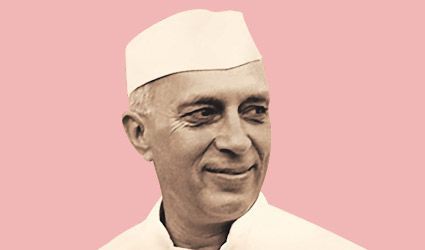
Pandit Motilal Nehru, whose 165th anniversary fell on May 6, was one of the greatest stalwarts of the freedom movement. He was twice the President of INC - in 1919 (Amritsar) and 1928 (Kolkata). Amongst the topmost lawyers in the country in the beginning of the twentieth century, he sacrificed his lucrative legal practice under the spell of Mahatma Gandhi’s Non-Cooperation movement in 1920-21. Within a decade, when Gandhiji launched his second historic struggle - the Salt Satyagrah - the illustrious father of Jawaharlal Nehru gifted his palatial abode - Anand Bhavan, Allahabad- in the cause of freedom struggle. A material sacrifice of this kind has a few parallels in political history.
Speaking during the last special session of the Parliament on Delimitation Bill, disguised as Women Reservation Bill, Congress leader Priyanka Gandhi Vadra began her speech with reference to Pandit Motilal Nehru explaining how he was the first leader to take up the cause of women empowerment through legislation. If one goes through the fine print of Motilal Nehru Report of 1928 authored by Motilal Nehru himself, the point highlighted by the Wayanad MP can be understood in its context.
The annual Congress session of 1927 was held in Madras (now Chennai) under the Presidentship of Dr. MA Ansari. The Congress resolved to draft a ‘Swaraj Constitution’ in consultation with other parties. In February 1928, an All - Parties Conference met in Delhi and voted for a ‘full responsible government.’ It again met in Bombay (now Mumbai) in May and appointed a sub-committee to determine the principles of an Indian Constitution. The sub-committee was headed by Motilal Nehru and hence came to be known as the Nehru Committee which had representatives of all the communities and also Sir Tej Bahadur Sapru, the leader of the Liberals, who alongwith Jawaharlal Nehru, the Secretary of the committee, helped the elder Nehru in preparing the draft of the proposed Constitution.
The Nehru Committee had to find an answer to the burning question of position of minorities in a free and democratic India. If British autocracy was to be replaced by Indian democracy, would it give a permanent advantage to the Hindu majority as claimed by Sir Syed Ahmed? One method of protecting the interest of minorities was to incorporate special provisions or ‘safeguards’ like the institution of separate electorates, the election of Muslim candidates by Muslim votes and reservations. Separate electorates were first introduced under the Minto - Morley Reforms in 1909, and extended 10 years later in the Reforms Act of 1919. Three years earlier, in 1916, the Lucknow Pact of 1916, in which Lokmanya Tilak played a significant role, committed the Congress to separate electorates. But by 1928, the Muslim demands had grown. ‘The communal climate of the twenties encouraged a fantastic political arithmetic of percentages of seats and jobs, which baffled the Nehru Committee as soon as it set to work.’
A great deal of hard work went into the report but it was not easy to secure a consensus of opinion in a committee whose members diverged widely in their views and aspirations. Though Motilal Nehru and Tej Bahadur Sapru were the joint authors of what was officially declared by the Congress as the Nehru Report, the original Committee was enlarged by the addition of three stalwarts of the freedom movement- Annie Besant, Madan Mohan Malaviya and Lala Lajpat Rai, all former INC Presidents. According to historian BR Nanda, ‘the Nehru Report offered not a Constitution, but the outline of a Constitution which could be amplified and put into the form of a bill by a parliamentary draftsman.’ Among its important recommendations which were adopted at the Karachi session of INC, and finally incorporated in the Constitution of India were: parliamentary system of govt., adult franchise, equal rights for women, independent judiciary with Supreme Court at its apex, a bicameral legislature within a secular nation, redrawing boundaries of provinces (now states) on linguistic basis and complete abolition of untouchability.
The report was accepted by the Congress and most other parties except the Muslim League led by Jinnah and the Aga Khan who denounced the Nehru Report. The primary issues on which the breach occurred at the All-India Convention at Calcutta were: separate electorates, vesting of residuary powers with the provinces and reservation of one - third of seats in the central legislature.
Motilal Nehru was prepared to go far in writing safeguards for the minorities into the Constitution, but he felt a line had to be drawn somewhere so that the growth of a common citizenship and national spirit were not compromised. That is why he opposed separate electorates. However, the Nehru Report was an earnest attempt on the part of Indian leaders to come to terms with each other and with Britain. Mahatma Gandhi aptly described Motilal as ‘an eminently worthy ambassador of a nation that is need of and in the mood to make an honourable compromise.’ But the imperial government was happy that Motilal Nehru Report was not accepted by the Muslim League. For had it been endorsed by Jinnah, it would have cemented Hindu - Muslim unity, and perhaps the partition of India, two decades later, may not have taken place. This did not suit the British policy of ‘divide and rule ‘ which ultimately led to the vivisection of India.
Motilal Nehru, who was first the President of the INC in 1919, was elected its President again at the 1928 Calcutta session. He was the choice of not only Gandhiji, but also of the young leadership of Bengal, headed by Subhas Chandra Bose and his rival JM Sen Gupta, both of whom had strongly proposed his name. His warning on mixing religion with politics, foreshadowing his son and more illustrious son, is as relevant as it was a century ago in Bengal: ‘Whatever the higher conception of religion may be, it has in our day- to - day life come to signify bigotry and fanaticism, intolerance and narrow mindedness... Not content with its reactionary influence on social matters, it has invaded the domain of politics and economics ... Its association with politics has been to the good of neither. Religion has been disgraced and politics has sunk into the mire. Complete divorce of the one from the other is the only remedy.’
If the warning of the great patriot, and one of the greatest stalwarts of the freedom struggle, had been heeded, Bengal, indeed the subcontinent, wouldn’t have fallen prey to the kind of majoritarianism and communalism we are witnessing today.
(The author is Chairperson AICC Vichar Vibhag and Editor of The Secular Saviour)
Indian National Congress
AICC Hq, Indira Bhawan, 9A Kotla Marg, New Delhi - 110002