



Pandit Jawaharlal Nehru’s Multifaceted Personality and his unique sacrifices in the Freedom Struggle
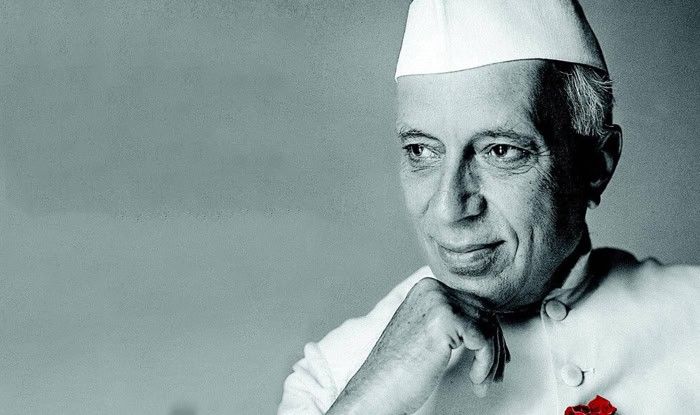
Pandit Jawaharlal Nehru’s Multifaceted Personality and his unique sacrifices in the Freedom Struggle
- Dr. Shashi Kumar Singh, Ph.D., D.Litt
Pandit Jawaharlal Nehru’s personality was a remarkable blend of intellectual depth, secular values, a scientific outlook, democratic commitment, and global humanism. He was a leader who, despite receiving a modern education at Cambridge University, maintained a deep connection with Indian culture, history, and philosophy. Pandit Nehru completely renounced personal pleasures, familial comforts, and a life of affluence to dedicate his entire life to the struggle for the country’s independence.During the freedom movement, he underwent imprisonment a total of nine times and spent approximately 3,259 days—that is, nearly nine years—in jail, a duration unmatched by any other Indian leader. These periods of imprisonment included an initial stint of 88 days (1921–22, in Lucknow Jail), a second term of 266 days, and a prolonged incarceration of 1,040 days at the Ahmednagar Fort during the Quit India Movement of 1942.
Even while enduring the arduous conditions of prison life, he penned his immortal works. ‘The Discovery of India’ was written at the Ahmednagar Fort between April and September 1944, offering a visionary interpretation of India’s ancient history, culture, philosophy, and future. ‘Glimpses of World History’ (1934) and ‘An Autobiography’ (1936) were also written during his incarceration, reflecting his extensive reading, historical perspective, and global understanding.Pandit Nehru’s works remain relevant and popular to this day—not only in India but across the globe. During his wife Kamala Nehru’s prolonged illness, he was released from prison to attend to her care, yet he never abandoned the struggle for independence. Mahatma Gandhi regarded Pandit Nehru as the symbol of India’s freedom and repeatedly lauded his intellectual prowess and foresight.
Jawaharlal Nehru possessed a multifaceted personality; he was a writer, historian, diplomat, social reformer, and a true defender of democracy. His sacrifices were not motivated by a lust for power or personal gain. He hailed from an aristocratic and affluent family (Anand Bhavan), yet he chose to endure the hardships of British prisons for the sake of the country’s independence. Logically, Pandit Nehru’s sacrifices were aimed at laying a strong foundation for nation-building. His scientific outlook elevated him above superstition and orthodoxy. On December 26, 1937, at the Indian Science Congress, he stated: “It is science alone that can solve the problems of hunger and poverty, insanitation and illiteracy, superstition, and the customs and traditions that stifle progress.”(“It is science alone that can solve the problems of hunger and poverty, of insanitation and illiteracy, of superstition and deadening custom and tradition…”)On January 21, 1950, emphasizing the necessity of a scientific outlook, he stated: “If science is truth, then you must follow that truth. Therefore, I stress the need for the development of a scientific mind and temperament, which is more important than anything else.”(“If science is truth, then you must follow that truth- So I stress the need for the development of a scientific mind and temper which is more important than anything else…”)
An Inclusive and Diverse Cabinet as the First Prime Minister of Independent India
On August 15, 1947, as the first Prime Minister of independent India, Pandit Jawaharlal Nehru constituted a cabinet that—despite the Congress Party’s clear majority—was replete with non-Congress leaders and individuals from diverse backgrounds. The cabinet included Syama Prasad Mookerjee (Industries), Dr. B.R. Ambedkar (Law Minister), Dr. John Matthai (Railways and Finance), Rajkumari Amrit Kaur (Health Minister), R.K. Shanmukham Chetty (Finance), Sardar Baldev Singh (Defence), among others. The Congress held an absolute majority, and there was no political or constitutional compulsion to do otherwise; yet, Pandit Nehru accorded key portfolios to representatives from Hindu, Muslim, Christian, Sikh, and Parsi communities, as well as to women and members of the Scheduled Castes.
Pandit Jawaharlal Nehru was the first Prime Minister of independent India, who made tireless efforts to modernize the country. At the time of independence, India was a poor, divided nation with a very low literacy rate and an almost negligible industrial base. Pandit Nehru laid a strong foundation for democracy, established a parliamentary system, and enshrined secularism as state policy. He placed special emphasis on science and technology, education, and heavy industries. His foreign policy was based on the Non-Aligned Movement, which kept India distinct from both blocs of the Cold War. Through the principles of Panchsheel, he strengthened ties with the newly independent nations of Asia and Africa. Between 1950 and 1965, industrial production nearly tripled, and the industrial growth rate stood at seven percent. GDP growth averaged between 3.9 and 4 percent—a revolutionary achievement compared to the colonial era. Pandit Nehru introduced the Five-Year Plans, which laid the foundation for economic planning.
Pandit Nehru donated 98 percent of his personal wealth to the nation. In 1946, he dedicated his father Motilal Nehru’s inheritance—worth approximately 196 crore (equivalent to thousands of crores in today’s value)—to the nation. He opened Anand Bhavan to the public. He retained only 4 crore for himself. This act of renunciation mobilized resources for nation-building. At that time, the country was grappling with the ravages of partition and war. This noble deed by Pandit Nehru stands as a moral exemplar not only for India but for the entire world.
The list of institutions established by Jawaharlal Nehru—which laid the foundation of modern India—is extremely extensive. The Indian Institute of Technology Kharagpur was established in 1950, followed by the establishment of other IITs. The All-India Institute of Medical Sciences, Delhi, elevated medical education to a world-class standard. The Bhabha Atomic Research Centre initiated the nuclear energy program. The Indian Institutes of Management strengthened management education.The National Institutes of Technology, KendriyaVidyalayas, the Planning Commission, the Bhakra Nangal Dam, the Bhilai Steel Plant, the Rourkela and Durgapur Steel Plants, Bharat Heavy Electricals Limited, and numerous other agricultural and healthcare institutions were established under the leadership of Pandit Nehru. These institutions strengthened India industrially and scientifically. Between 1950 and 1965, industrial production tripled. The literacy rate rose, healthcare services became accessible to all, and life expectancy improved. Pandit Nehru referred to these institutions as the ‘Temples of Modern India’.These institutions remain the foundation of the nation’s progress to this day. Without Pandit Nehru’s foresight, this achievement for India would not have been possible. Through them, millions of young people were trained, and the country advanced towards self-reliance.
Compared to the era of Pandit Nehru, India’s current economic situation is fraught with numerous challenges. Prior to 2014, the Central Government’s debt stood at approximately 55 to 58 lakh crore, a figure that has now exceeded ` 214.82 lakh crore. Per capita debt has increased manifold. Interest payments are consuming a significant portion of the budget. While several loan waiver schemes have been implemented for farmers, the crisis in the agricultural sector persists. Under the National Food Security Act, free food grains are currently being distributed to approximately 80 crore people.This statistic indicates that a large section of the country’s population still relies on government assistance for basic food needs. When 800 million people are dependent on free rations, where is true economic development to be seen? The unemployment rate remains high. Inflation has impacted the common people. Inequality has widened.
Under the current administration, allegations of institutional misuse have been raised continuously. Accusations have been levelled regarding the selective targeting of opposition leaders through legal cases, as well as the alleged control exerted over the independent media and investigative agencies. Pandit Nehru established independent and robust institutions—such as the judiciary and the Election Commission—and strengthened the Parliament. His policies served to deepen the roots of democracy. Today, whenever questions arise regarding these institutions, attempts are made to conceal current failures by downplaying the legacy of Pandit Nehru. Pandit Nehru upheld constitutional values. His periods of imprisonment and his spirit of sacrifice laid the very foundation of institutional democracy. In the present context, questions surrounding institutional autonomy inevitably impact the overall strength of democracy.
India’s international image has taken a hit. Leaders of major nations criticize India, yet no substantive response is forthcoming from the Prime Minister. Through the Non-Aligned Movement, Pandit Nehru gave India an independent voice. The principles of Panchsheel and a policy of peace earned the nation global respect. Today, questions are being raised regarding secularism, the protection of minorities, and democratic values. Pandit Nehru’s foreign policy established India as a moral force. Currently—despite its multilateral engagements—India’s image is suffering; people across the world mock the country, yet the present government remains indifferent to this fact.
The situation regarding unemployment and loan waiver schemes remains a cause for concern. The 2014 promise of creating 20 million jobs annually remains unfulfilled. While numerous loan waiver schemes have been implemented, the agrarian crisis persists. During the Nehruvian era, industries were established to generate employment. Currently, widespread youth unemployment continues to pose a significant challenge for the nation.
Pandit Jawaharlal Nehru’s Enduring Legacy and the Path Ahead
Pandit Jawaharlal Nehru’s sacrifices, inclusive vision, institution-building efforts, and healthy democratic traditions still possess the capacity to guide India in the right direction today. During the freedom struggle, Pandit Nehru was imprisoned nine times and spent a total of 3,259 days behind bars. He completely renounced personal comfort, family happiness, and a life of affluence. By including non-Congress leaders—and even critics—such as Syama Prasad Mookerjee, Dr. B.R. Ambedkar, Rajkumari Amrit Kaur, R.K. Shanmukham Chetty, and Sardar Baldev Singh in his first cabinet—despite the Congress Party holding an absolute majority—he demonstrated that national interest must always take precedence over Party interest.
Despite acute resource scarcity, Pandit Nehru laid a strong foundation for Five-Year Plans, colossal dams like Bhakra-Nangal, steel plants in Bhilai, Rourkela, and Durgapur, the IITs, AIIMS, CSIR’s national laboratories, the Atomic Energy Commission, and the space program. He made ‘Scientific temper’ a cornerstone of national policy, enshrined ‘unity in diversity’ and secularism as constitutional values, and, through the Non-Aligned Movement, established India as a moral force on the global stage.
Unfortunately, the ruling establishment today has become so corrupt and anti-national that, in order to retain power, the government machinery, investigative agencies (CBI, ED), the media, the Election Commission, the police, and public resources are being openly misused. While Pandit Nehru regarded the opposition as a respected partner in nation-building, today the opposition is being crushed by being branded as anti-national. While Pandit Nehru, with a magnanimous spirit, accorded critics a place in his cabinet, today the ruling power rests solely on blind devotion, Party loyalty, and personal allegiance. Corruption has now assumed an institutionalized form. The real issues concerning the public—education, healthcare, employment, inflation, and development—have been completely neglected. The insatiable lust for power has transformed politics from an act of national service into a sordid, self-serving, and anti-national game.
Pandit Nehru’s enduring legacy serves as a constant reminder that true leadership stems from personal sacrifice, intellectual foresight, inclusivity, integrity, and a ‘Nation First’ mindset. The corruption and anti-national character of the current regime have deeply damaged the very roots of Indian democracy. The selective use of investigative agencies, control over the media, religious and caste-based polarization, disregard for the public interest, and the misuse of constitutional institutions are steering the country toward a grave crisis.
Only if we earnestly embrace Pandit Nehru’s ideals—scientific temper, secularism, institutional impartiality, and service to the nation—can we build a strong, prosperous, just, and truly democratic India. Pandit Nehru’s legacy is not merely a memory of the past, but rather the most effective solution to present-day challenges and a clear guide for the future. The younger generation must understand that selling out the country for the sake of power constitutes treason. Pandit Nehru demonstrated that even a resource-scarce nation can scale global heights through honesty, foresight, and visionary thinking.
Today, there is an urgent need to revive the traditions of Pandit Nehru, so that politics may once again become a sacred medium for national service, rather than a breeding ground for corruption, anarchy, and the dark games of power. Only by embracing the immortal legacy of Pandit Nehru can we realize the dream of a truly developed, inclusive, and glorious India. The time has come for us to recognize the corrupt nature and anti-national character of power politics, and to make a fresh start in the guiding light of Pandit Jawaharlal Nehru.
(The author is a Member of the All-India Congress Committee and the General Secretary (Organizing In-charge) of the Vichar Vibhag)

Indian National Congress
AICC Hq, Indira Bhawan, 9A Kotla Marg, New Delhi - 110002